

3D DOOH content workflow is different from standard motion graphics because the creative has to read from a specific viewpoint, screen geometry, and audience path. That means the brief has to define more than a message and runtime. It needs the viewing angle, placement assumptions, and revision expectations up front, or the project can drift into rework, slower approvals, and quote noise.
What Makes 3D DOOH Different
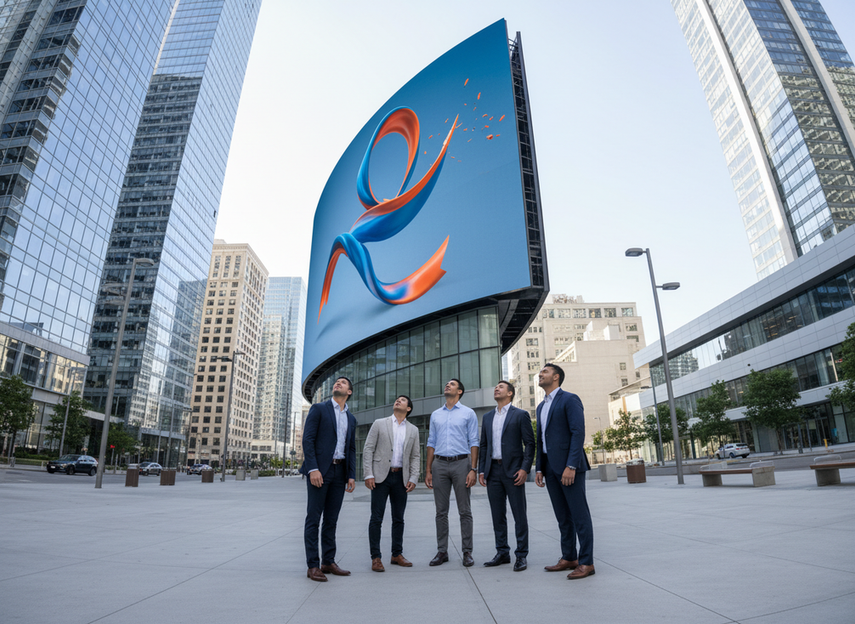
3D DOOH works because the image is engineered for forced perspective, not because the screen itself is doing something magical. In plain terms, the creative has to line up with where people will actually stand or drive past it. If the geometry is wrong, the illusion weakens fast.
That is why a naked-eye 3D billboard campaign usually needs a tighter brief than standard DOOH creative. The team should know the screen shape, the dominant viewing angle, and the placement before production starts. A concept that looks strong in a storyboard can still fail once it is mapped to the real site.
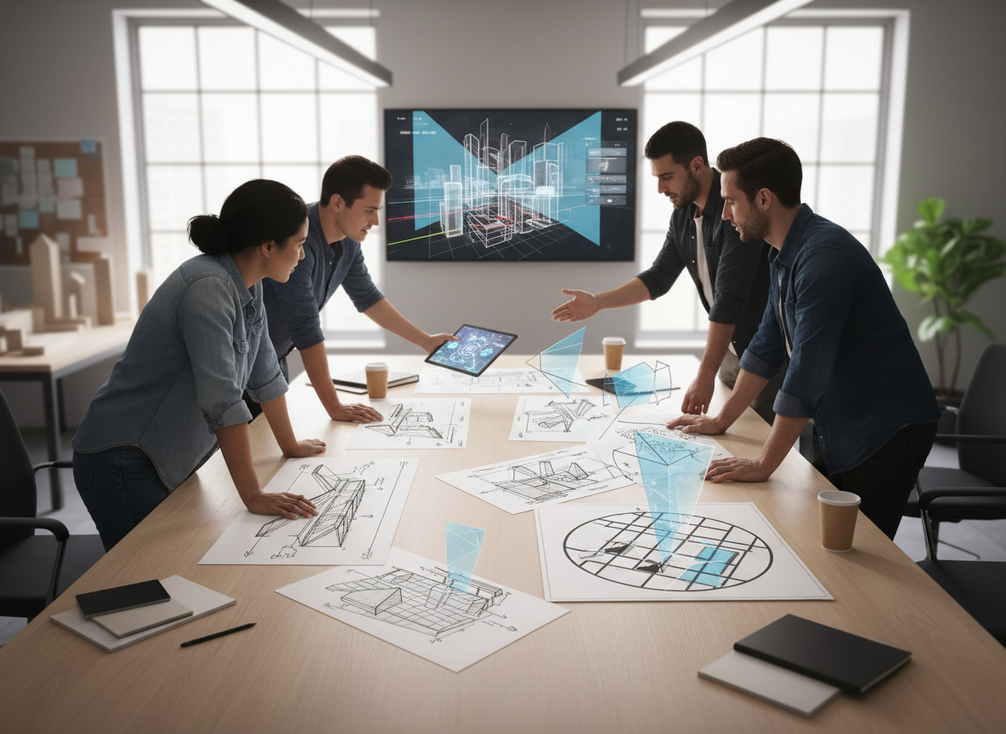
The practical difference is revision load. Standard motion pieces can often be adjusted late with minor layout changes, but 3D DOOH usually depends on perspective, proportions, and motion timing working together. 3D billboards 101 is a useful plain-language reference for why that site-specific setup matters. If you are comparing display paths, 3D billboard solutions may help you frame the hardware context, but the creative decision still starts with viewpoint.
How the 3D DOOH Creative Workflow Works
The easiest way to plan 3D DOOH is as a four-stage workflow: concept, 3D build, perspective calibration, and playback delivery. That sequence keeps the handoff points visible before the first quote goes out.
Brief, Viewpoint, and Creative Direction
Start with the campaign objective, audience, and viewing distance. Then add the screen geometry, dominant angle, and any placement limits that affect how the illusion will read. If those inputs are missing, the concept stage stays too abstract and the rest of the schedule becomes guesswork.
This is also where teams should decide whether the idea is really a fit for naked-eye 3D or whether standard DOOH motion would communicate faster. If the campaign depends on a dramatic visual trick, the viewpoint brief has to be locked early. If the message is simple and direct, a full anamorphic build may add complexity without enough payoff.
3D Modeling, Animation, and Perspective Build
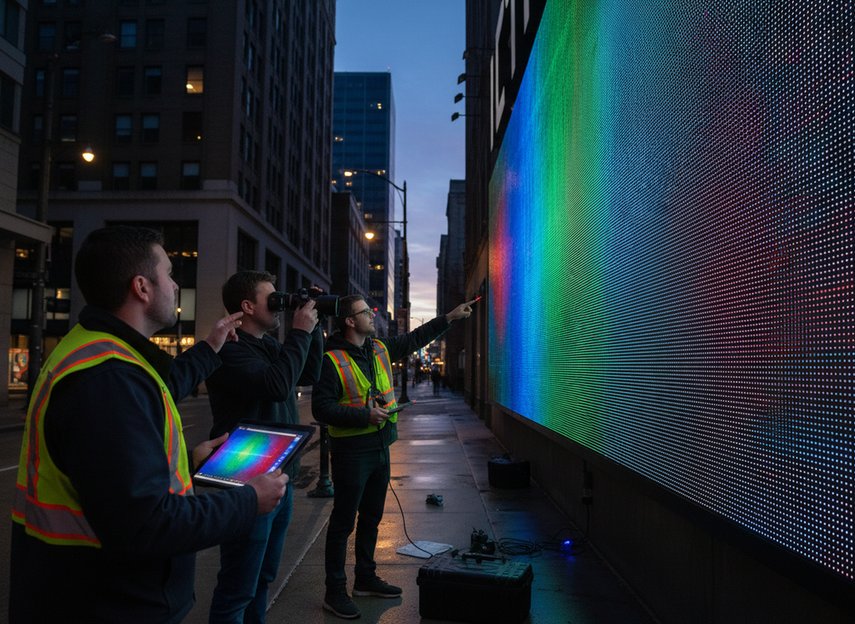
Once the direction is set, the creative team builds the 3D assets and animation. The difference from a normal motion package is that the scene cannot be treated as a generic export. It has to be adjusted for the specific screen and sightline so the illusion reads from the street, not just in the design file.
That screen-specific work is one reason the 3D DOOH content production workflow usually takes longer than standard motion projects. The creative is not only being designed; it is being tuned. In practice, that means more room for test renders, perspective checks, and small fixes that protect the effect before final delivery.
Review Cycles, Versioning, and Final Delivery
The review path should include creative approval, technical review, and playback checks. Those checkpoints reduce the risk of discovering a format issue or proportion mismatch at the end. They also make it easier to track which version is the approved one, which matters when multiple stakeholders are weighing in.
Plan revision rounds before quoting, not after. If a partner assumes one approval round and your team expects three, the schedule and budget will not match. Final files should also be delivered in the resolution and format required by the playback environment, which is why a quote request should never be limited to just the concept idea.
What Drives 3D DOOH Costs
The cost of anamorphic 3D LED content usually moves with scope, not with a single flat rate. The biggest variables are concept complexity, number of scenes, depth of 3D modeling, motion length, revision rounds, screen-specific adaptation, and delivery formats. In other words, the budget shifts when the project asks for more creative decision-making or more technical adjustment.
| Cost Driver | Why It Changes Cost | Planning Impact | What To Ask Before Quoting |
|---|---|---|---|
| Concept complexity | More visual ideas usually mean more design exploration and more approval pressure | Raises early creative time | What is the core illusion, and how many moving parts are in it? |
| Number of scenes | More scenes add modeling, animation, and continuity work | Expands production hours | How many scene changes are actually needed for the story? |
| Depth of 3D modeling | More detailed assets take longer to build and polish | Raises build time | Do we need simple objects, or fully customized assets? |
| Motion length | Longer runtime adds animation and render work | Increases delivery load | What runtime is essential, and what can be cut? |
| Revision rounds | Each extra review cycle adds rework and schedule slack | Delays approvals | How many approval rounds are included in the quote? |
| Screen-specific adaptation | Geometry and sightline tuning can require separate adjustments | Adds technical setup time | Which screen dimensions, angle, and placement assumptions are included? |
| Delivery formats | More output versions mean more export and QC work | Increases finish-stage effort | What file formats and resolutions are required for playback? |
The technical load can rise quickly on high-end jobs. Maxon’s anamorphic billboard example notes that projects can reach very high resolutions and heavy per-frame data loads, which is a reminder that production cost is not only about design talent. It is also about render time, file handling, and final delivery complexity. A broader outdoor DOOH solutions path can help buyers think about the deployment side, but it does not replace a scoped creative brief.
How to Plan Timeline and Approvals
A realistic 3D DOOH content workflow needs enough time for concept approval, perspective checks, and revision buffer. The common planning range in the available research clusters around 4 to 8 weeks, but that should be treated as a scope-dependent planning window, not a promise. Heavier concepts, more stakeholders, or tighter screen adaptation can push it longer.
- Lock the brief. Define objective, audience, runtime, screen assumptions, and launch date before production begins.
- Approve the concept. Make sure the illusion idea works for the venue before detailed modeling starts.
- Build and tune the scene. Expect the 3D work to include perspective adjustments and test renders.
- Run technical checks. Confirm file format, resolution, and playback requirements before the final handoff.
- Keep a revision buffer. Leave room for stakeholder feedback, especially if legal, brand, or venue review is involved.
- Deliver early enough to test. Final output should arrive with time for playback verification, not on the launch morning.
This is the point where campaigns often break down. If the launch date is fixed but the brief is still changing, the team should narrow scope rather than assume extra speed will solve the schedule. For outdoor deployment context, outdoor DOOH deployment is a useful path to browse after the creative plan is stable.
What to Check Before You Request Quotes
Before you ask for pricing, make sure the brief is specific enough that different vendors would be quoting the same project. The OAAA DOOH Creative and Content Guidelines are a good anchor for early technical inputs because they emphasize screen specs, pixel width and height, and file type considerations.
- Campaign objective: What should the 3D piece make people notice or remember?
- Viewing angle: Where will the audience actually see the screen from?
- Screen dimensions or format assumptions: What geometry should the team design for?
- Motion length: How long does the piece need to run?
- Revision expectations: How many review rounds should be priced in?
- Launch timing: When does the campaign need final delivery?
- Delivery requirements: Which file formats, resolution, and playback specs are required?
- Approval contacts: Who signs off on creative, technical, and venue checks?
If you can answer most of those points, you are probably ready to request a scoped quote. If not, you are still in discovery mode, and that is the better moment to clarify assumptions. A concise 3D billboard request path can help once the brief is firm, but the quote itself should start with the inputs above, not with a generic price ask.
Final Takeaway
3D DOOH content workflow is best treated as a screen-specific production process with real budget and timeline consequences. The fastest way to improve quote accuracy is to define the viewing angle, screen assumptions, runtime, revision expectations, and launch timing before production starts. If you are planning a campaign, we can help you scope the creative brief and match it to the right deployment path.
FAQs
How Long Does a Naked-Eye 3D Billboard Project Take?
A simple project can move faster than a complex one, but the real schedule depends on concept approval, screen-specific tuning, and revision load. Use the 4 to 8 week planning window as a starting point for scope discussions, then add buffer if the campaign needs multiple stakeholder approvals or a late launch date.
What Files or Inputs Do Agencies Need Before Production Starts?
At minimum, the vendor should know the objective, viewing angle, screen dimensions or format assumptions, runtime, launch date, and approval contacts. The more clearly you define those inputs, the easier it is to compare quotes on the same scope and avoid back-and-forth that inflates the calendar.
What Makes Anamorphic 3D Content Different From Standard DOOH Creative?
Standard DOOH creative can be built for general visibility, but anamorphic 3D content has to be engineered for one viewing geometry. That means the image, motion, and perspective all work together. If the site does not support that illusion clearly, a simpler motion approach may be the better fit.
Can a Standard Motion Graphics Team Produce 3D DOOH Content?
Sometimes, yes, but the team usually needs screen-aware planning and tighter technical review than a normal motion job. If the project is small and the illusion is simple, an experienced motion team may handle part of it. If the campaign depends on a strong forced-perspective effect, 3D and playback expertise become much more important.