

Download: C Tra Kxb Ven Specification Sheet
P10 Ventilated ETC Traffic LED Screen: Technical Specification & Engineering Selection Guide
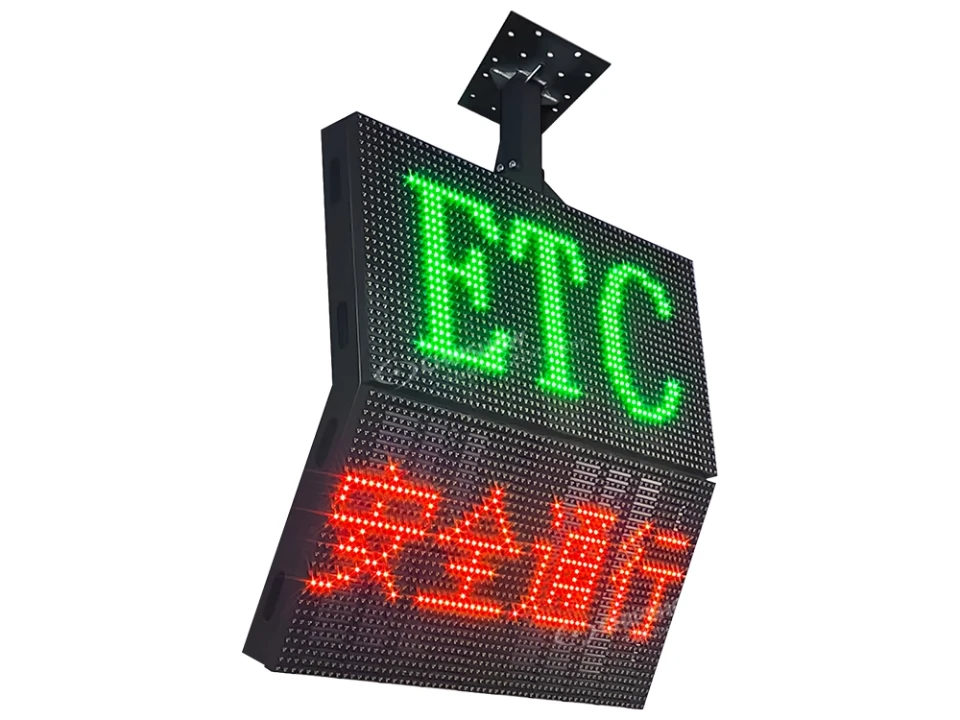
For intelligent transportation system (ITS) integrators and highway infrastructure contractors, selecting roadside and toll lane visual assets is an exercise in risk mitigation. Overhead gantries and Electronic Toll Collection (ETC) lanes demand continuous uptime under brutal environmental conditions.
To assist design engineers in verifying structural compliance and electrical load calculations for upcoming tenders, Chipshow has released the complete technical documentation for its high-permeability traffic display system.
1. Core Structural & Mechanical Parameters
Highway gantries and toll plazas are highly vulnerable to localized wind-tunnel effects and structural fatigue. Traditional, heavy iron cabinets act as massive wind sails, forcing costly structural reinforcements on aging gantry steelwork. The P10 ventilated series re-engineers this relationship:
- Wind Load Reduction: Built with a specialized ventilated structure, the modules deliver a permeability rating of ≥35%. This design allows ambient wind to pass directly through the screen body without light leakage, significantly lowering wind resistance and protecting the structural integrity of full-span overhead portals.
- Dead Load Optimization: The slim profile maintains a thickness of ≤9cm (with a core cabinet depth of 81mm). By driving the total system weight down to a nominal 26kg/㎡ (with standard aluminum/sheet-metal cabinet configurations averaging 55kg per 1920×960mm unit), engineers can substantially reduce static load calculations on toll lane headers.
- Fast Dual-Access Maintenance: Toll road downtime equates to immediate revenue loss and safety hazards. The 480×160mm modules support independent, rapid front and rear disassembly. Technicians can replace a module in under two minutes without disturbing adjacent power distribution boxes or receiving cards, minimizing lane-closure windows.
2. Optical Performance & Regulatory Compliance
Variable Message Signs (VMS) must remain perfectly legible from long braking distances, regardless of low-angle winter sun glare or heavy torrential rain.
- Sun-Glare Penetration: Utilizing specialized SMD2727 Sphere LEDs with a calibrated 60° beam angle, the display achieves a white-balance brightness of 8,000 cd/㎡ (nits). This focused optical path ensures speed limits, lane status signs, and ETC validation alerts remain crisp and legible at high driving speeds, avoiding direct solar washout.
- High-Contrast Pixel Layout: A physical pixel pitch of 10mm yields a density of 10,000 dots/㎡. Combined with independent, removable module visors, the screen actively cuts down ambient reflections, maintaining high-contrast ratios across changing daylight environments.
- Broadcast-Clean Refresh Rates: Operating at a 1920Hz refresh frequency and 14-bit grayscale depth driven by MBI5124 constant-current ICs, the display outputs flicker-free content. This satisfies the strict requirements of highway monitoring cameras and law enforcement optical systems.
3. Electrical Efficiency & Environmental Hardening
Long-term OpEx and field reliability are won or lost on power budgets and thermal management. Roads and tunnels are highly corrosive, saturated with carbon exhaust, road salt, and moisture.
- Natural Convection Thermal Management: The ventilated open-air module layout harnesses natural air convection for internal heat dissipation. This eliminates the need for external air conditioning units or heavy exhaust fans, preventing internal condensation and lowering total cost of ownership (TCO).
- Prudent Power Allocation: Engineered with energy-efficient drive topologies, the screen draws a maximum power of ≤500 W/㎡ under peak load, with a highly sustainable typical operating average of ≤150 W/㎡. This low heat output significantly retards LED aging and extends the system’s operational lifecycle.
- Dual IP65 Sealed Protection: To combat driving rain and atomized road spray, both the front and rear faces of the display assembly are rated to IP65 standards. The electronics operate reliably across a standard temperature envelope of −20°C to +50°C, providing predictable uptime on both coastal bridges and inland expressways.
- Partner-Friendly Control Integration: The system architecture uses standard QP-HUB75 interfaces and supports standard Windows/Win 7 operating environments. It integrates seamlessly with mainstream highway controllers, enabling standard pixel-level status checks and automated failure fallback workflows within existing Traffic Management Centers (TMC).
4. Technical Summary Table for ITS Engineering Audits
| Engineering Parameter | Certified Value / Specification Range | Operational Impact for Contractors |
|---|---|---|
| Pixel Pitch | 10 mm | Standard ITS text definition and icon spacing |
| Module Size / Resolution | 480 × 160 mm / 48 × 16 Dots | Modular building blocks for standard lane layouts |
| Cabinet Dimensions | 1920 × 960 × 81 mm | Ultra-slim profile for precise lane alignment |
| System Weight | ~26 kg/㎡ (Module level) | Lowers structural steel load-bearing requirements |
| Peak Brightness | 8,000 cd/㎡ (Nits) | Penetrates heavy fog and high-glare sun conditions |
| Wind Permeability | ≥ 35% | Minimizes overturning moments on long-span gantries |
| Power Consumption | Max: ≤500 W/㎡ / Avg: ≤150 W/㎡ | Eliminates HVAC installation, reducing infrastructure OpEx |
| Ingress Protection (IP) | Front: IP65 / Rear: IP65 | Resists roadside carbon emissions and severe moisture |
| Control Support | Mainstream-controller ready (HUB75) | Allows native integration into local ITS software networks |