


A stadium LED display near the touchline should reduce player-contact risk while keeping sponsor content visible on camera. For football clubs, stadium operators, sports venue integrators, and perimeter advertising teams, the right system needs soft cushioning, stable support, controlled brightness, broadcast-ready refresh, and serviceable outdoor cabinets. The purchase decision should balance safety review, sponsor exposure, event compliance, and long-term operating cost.
Why Does a Stadium LED Display Need Both Safety and Sponsor Visibility?
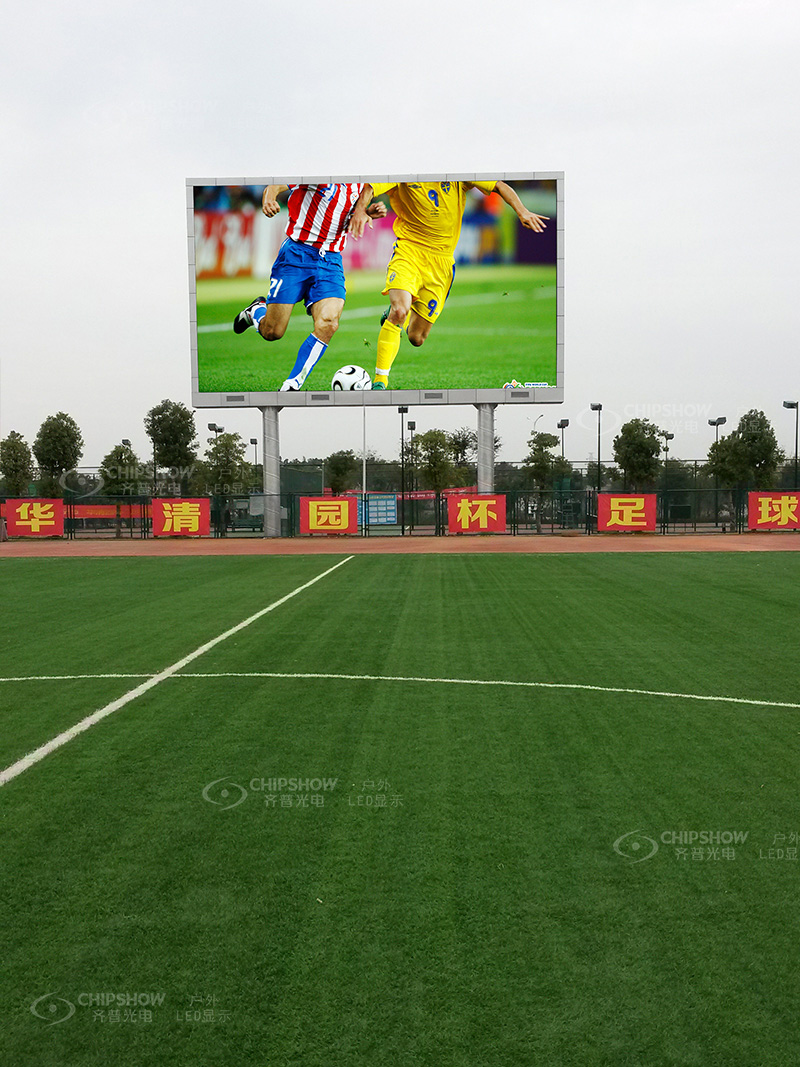
Pitch-side LED boards work in a high-contact zone where athletes, cameras, stewards, and sponsor inventory meet.
A perimeter system has two jobs. It should help reduce injury risk near the field, and it should keep sponsor graphics clear for spectators and broadcast cameras. A weak specification can create safety concerns, poor camera output, or lost advertising value.
| Decision Area | Safety Requirement | Sponsor Visibility Requirement |
| Player contact zone | The front mask and top edge should cushion impact. | The LED face should keep clear contrast after protection is added. |
| Cabinet support | Rear legs should reduce tipping risk on turf or hard surfaces. | The screen angle should face main camera positions. |
| Brightness control | Output should avoid glare near the pitch. | Content should remain readable under sunlight or floodlights. |
| Signal design | Power and data faults should be isolated quickly. | Backup signal paths reduce blackout risk during live events. |
| Service access | Fast repairs reduce unsafe temporary fixes. | Shorter downtime protects sponsor delivery. |
The strongest specification treats safety and media value as connected requirements. Both should be reviewed during tender planning.
What Safety Features Matter in a Stadium LED Display?
Player safety starts with the surfaces and structures closest to the field.
Soft Mask and Top Cushion
A soft mask LED display for stadium player protection uses rubber-facing material over the LED module area. The goal is to reduce direct contact with hard LED components during slides, falls, or accidental collisions.
A football stadium advertising LED board with a soft cushion also needs a padded top edge. The top edge can contact knees, hips, shoulders, and heads. Buyers should ask about cushion material, attachment method, replacement parts, and maintenance access.
Stable Rear Support and Anti-Tipping Design
A pitch-side cabinet should resist forward movement. Rear support legs spread the load and help maintain the correct viewing angle.
Surface conditions also matter. Natural grass, synthetic turf, concrete, and temporary flooring create different stability demands. Tender documents should request the support method for each surface type.
Electrical Safety and Emergency Shutdown
Perimeter boards use long power and data runs. Grounding, cable routing, circuit protection, and emergency shutdown access need review during system design.
A safe layout keeps cables away from player paths and steward routes. It also lets venue staff shut down affected sections during a pitch-side incident.
Which Broadcast Specs Support Sponsor Visibility?
A stadium LED display should look clean to spectators and broadcast cameras.
Refresh Rate and Camera Capture
Match refresh, scan behavior, brightness, and synchronization to the venue’s actual camera and shutter settings. A numeric refresh rating alone does not establish broadcast compatibility; record moving-shot and low-brightness capture tests for the delivered configuration.
High-frame-rate cameras and slow-motion replay need closer testing. Buyers should request real camera checks with the venue’s production settings. Refresh rate matters, but camera angle, shutter speed, brightness, and scan mode also affect results.
Viewing Angle and Screen Tilt
Football stadiums create wide viewing geometry. Spectators see boards from corners, upper tiers, and lower bowl seats.
Wide viewing angles help maintain brightness and color from seats off to the side (off-axis). Adjustable rear support also helps aim the LED face toward main cameras. This improves sponsor legibility during match coverage.
Chipshow’s C-Sport includes a Wide-View SMD version for stadium bowls, steep tiers, and multi-camera coverage. Buyers should review viewing angle, camera layout, seating geometry, and daylight exposure before selecting the final configuration.
Brightness and Color Control
Outdoor stadium boards often need high brightness for daylight readability. Excess brightness can create glare for players and reduce camera balance.
Brightness should follow ambient light, match timing, and camera exposure. Auto-brightness sensors can support stable output across day and night fixtures. Final settings should be checked during on-site commissioning.
How Do FIFA and UEFA Requirements Affect Stadium LED Display Projects?
For projects used in FIFA-related or professional football environments, stadium perimeter LED screen layouts should be reviewed against event documents, venue drawings, and competition requirements.
Field Clearance and Board Position
FIFA stadium guidance, Sections 5.3.1–5.3.3, relates advertising-board position to player clearance, sightlines, and emergency access. It also notes tournament-specific placement requirements. Check the applicable event manual and approved venue drawing for this project.
Project teams should check the local league, federation, and event manual. These documents may define clearance zones, access paths, camera positions, emergency routes, and board placement.
Competition Technical Specifications
UEFA competition documents may require host clubs to provide LED advertising board systems that meet specific technical instructions. These requirements can cover board length, height, visibility from the main camera, testing, calibration, and operating readiness.
Do not treat a general product sheet as full event compliance. A supplier should support drawings, system layout, test documents, and installation details for the approval process.
Brightness Limits and Player Glare
Glare control is part of pitch-side safety. Brightness should support sponsor visibility without disturbing players tracking the ball.
A practical specification should define maximum operating brightness, sensor control, and match-day adjustment procedure. Stadium staff should be able to reduce output if glare affects play.
Which Stadium LED Display Specs Balance Safety and Visibility?
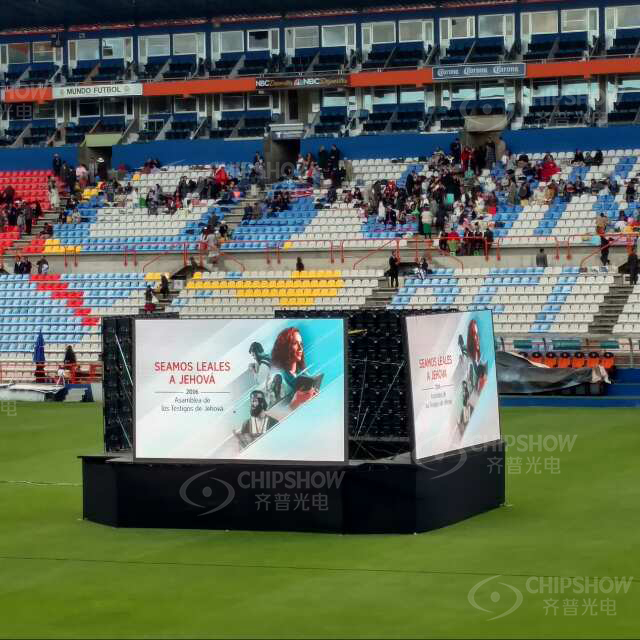
Spec comparison should focus on the requirements that affect player-contact risk, camera readability, and match-day uptime.
| Spec Area | What to Check | Why It Matters |
| Soft mask and top cushion | Confirm soft rubber front protection, padded top edge, and replaceable parts. | These parts help reduce direct contact with hard LED surfaces near the pitch. |
| Rear support and board angle | Review support legs, ballast (counterweights), anchoring, and adjustable screen angle. | Stable support reduces tipping risk and helps aim sponsor content toward cameras. |
| Brightness control | Check daylight brightness, manual control, and auto-brightness settings. | Proper control keeps ads readable without creating glare for players. |
| Refresh rate and scan mode | Specify tested camera/shutter settings, scan mode, synchronization, and driver-chip configuration. | This helps reduce flicker, rolling horizontal bands, and scan-line risk during capture. |
| Viewing angle | Match wide-view or focused-beam design to bowl geometry and camera layout. | The right optical design improves sponsor visibility from stands and broadcast positions. |
| Service access and IP rating | Confirm IP65 or project-required sealing, plus front, rear, or dual access. | Outdoor protection and quick service help maintain safe operation and sponsor uptime. |
For stadium perimeter projects, Chipshow’s C-Sport series can be configured around different venue priorities. Wide-view SMD versions are suited to stadium bowls with steep seating and multi-camera coverage, while ultra-bright configurations can be reviewed for sun-facing touchlines or open-air venues where daylight readability is critical. Final selection should be based on camera layout, field clearance, seating geometry, and match-day operating conditions.
The final specification should match field clearance, camera distance, sunlight exposure, and service access. Buyers should compare the complete perimeter system, not isolated cabinet specifications.
How Do Safety and Visibility Requirements Affect Stadium LED Hoarding Price?
Stadium LED hoarding (perimeter advertising boards) price depends on the full working system and the risk level of the venue.
| Cost Factor | Why It Changes Price | Buyer Checkpoint |
| Pixel pitch | Finer pitch increases LED count and module cost. | Match pitch to camera distance and board height. |
| Total perimeter length | Longer runs need more cabinets, cables, receiving cards, and control capacity. | Calculate by linear meters and feet. |
| Brightness level | Higher brightness requires stronger LED packages and thermal control. | Separate shaded sides from sun-facing sides. |
| Soft protection | Soft masks, polyurethane (PU) top cushion, and edge buffers add material and replacement cost. | Check whether protective parts are replaceable. |
| Rear support system | Stable support legs, ballast, or anchoring affect hardware and labor. | Review turf, concrete, and temporary floor conditions. |
| IP rating | Outdoor sealing raises cabinet, connector, and module requirements. | Confirm IP65 or the project-required protection level. |
| Control system | Processors, monitoring, and redundancy affect the total system price. | Price the working system, not only LED cabinets. |
| Service plan | Spare modules, cables, masks, and local support affect long-term cost. | Include spares in the initial project budget. |
A low cabinet quote can lead to higher field cost. A serious budget should include cabinets, control, power, soft protection, support structure, packaging, spares, and commissioning.
How Should Buyers Specify an Impact Resistant LED Perimeter Display for Sports Stadiums?
Impact resistance should be reviewed through cabinet structure, front protection, support design, and service planning.
Ball Impact and Module Protection
An impact resistant LED perimeter display for sports stadiums needs a protected LED face and a strong cabinet structure. Recessed modules, edge protection, and soft facing can help reduce damage from ball contact.
Project teams should ask how the cabinet handles repeated contact during football use. They should also check how quickly damaged modules, masks, or top cushions can be replaced.
Player-Contact Protection
For player-contact protection, define the cushion condition and inspection interval with the venue team. Request relevant impact and wear evidence, secure attachment details, and a replacement method for masks and top cushions. A full season of use is not a universal test or guaranteed protection period.
Chipshow’s C-Sport ICE Ultra-Bright can be reviewed for sun-facing touchlines where direct sunlight reduces readability. Its focused optics and dual IP65 sealing are designed for demanding outdoor stadium sides.
Weather and Corrosion Resistance
Outdoor sports venues face rain, dust, UV exposure, cleaning water, and temperature changes. Coastal venues also face salt and humidity.
Aluminum cabinet structures can reduce corrosion risk compared with untreated steel. Outdoor connectors, sealed modules, and drainage design should also be reviewed during project planning.
Maintenance Access During Match Calendars
Stadium screens rarely get long maintenance windows. A serviceable design should allow fast module, power, cable, mask, and cushion checks.
Front or dual service access can reduce removal work. Spare modules, soft mask parts, top cushions, and cables should be stored on site or supplied through a defined service plan.
How Can Stadium LED Displays Protect Sponsor Visibility?
Sponsor visibility depends on camera readability, controlled brightness, stable uptime, and verifiable content delivery.
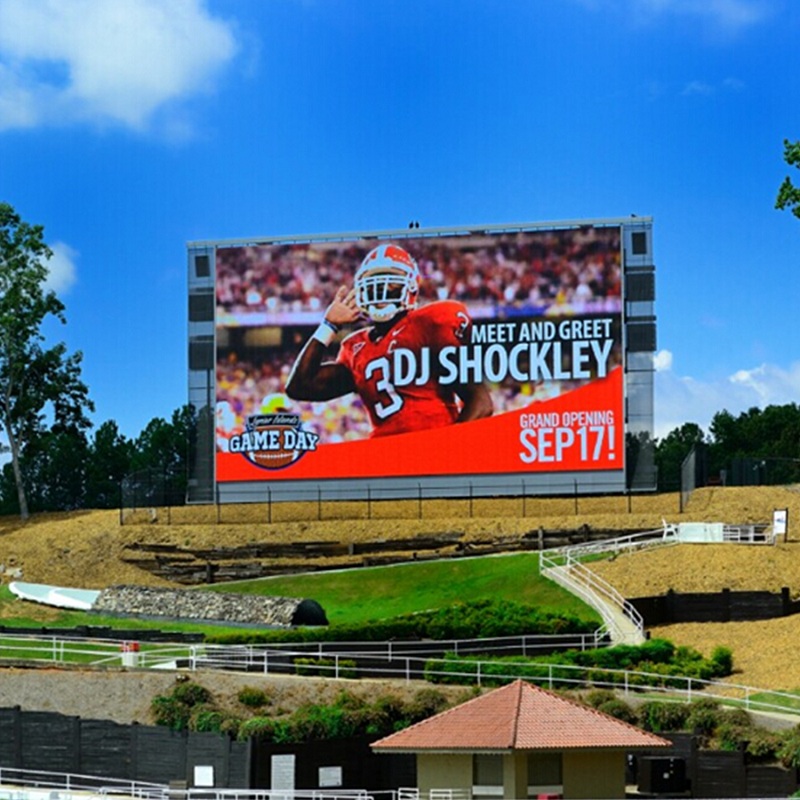
Camera-Readable Sponsor Content
Sponsor logos should remain readable from the main camera position and common spectator angles. Pixel pitch, board height, viewing angle, screen tilt, and content design all affect visibility.
Test camera readability separately from direct viewing. Flicker and scan bands involve timing; moiré involves spatial sampling of the display by the camera. Validate distance, lens, focus, angle, shutter, scan behavior, and brightness together.
Brightness Control Across Match Conditions
Brightness should support sponsor readability without creating glare near the pitch. Day matches, night matches, shaded stands, and floodlit conditions require different settings.
Auto-brightness sensors can help maintain stable output. Venue teams should also define manual adjustment authority for match-day operations.
Uptime and Proof of Delivery
Sponsors pay for visible exposure. Screen downtime can reduce campaign value and create reporting disputes.
Monitoring software, backup signal paths, and fast service access help protect delivery. Operators should record uptime, playlist logs, and content changes for sponsor reporting.
Match-Day Content Scheduling
A perimeter LED system can divide sponsor inventory into pre-match, in-play, half-time, goal moments, and post-match slots. This supports tiered sponsorship packages within the same physical perimeter.
The control system should support playlist accuracy, emergency overrides, and fast content updates. Content should stay clear, readable, and safe for pitch-side use.
Specify the Right Stadium LED Display for Safe, Visible Sponsorship
A stadium LED display for football perimeter use should start with player-contact risk reduction, then move to broadcast clarity, event documentation, and lifetime operating cost. Focus on soft masking, top cushioning, stable support, tested camera performance, project-required outdoor protection, and service access. For project teams comparing sports perimeter display systems, Chipshow’s C-Sport can be reviewed against P8 layout, soft mask protection, PU top pillow design, and high-brightness outdoor stadium requirements.
FAQs About Stadium LED Display Selection
Q1. How Are Stadium LED Perimeter Boards Controlled as One Continuous Display?
Stadium LED perimeter boards are controlled through video processors, sending cards, receiving cards, and mapped cabinet groups. The content is usually split into sections, then synchronized as one long canvas. For long pitch-side runs, operators should confirm resolution mapping, signal routing, content segmentation, and backup paths before match-day use.
Q2. Does FIFA Compliance Mean a Stadium LED Display Is Officially Certified?
No. FIFA compliance usually means the project layout, field clearance, safety routes, and advertising placement meet the event or venue requirements. It does not mean every LED cabinet has a universal FIFA product certificate. Buyers should review event documents, technical submissions, drawings, and on-site approval steps.
Q3. Why Do Stadium LED Ads Sometimes Look Different on TV?
Some broadcasts use virtual perimeter advertising or regional ad replacement. The physical LED boards show one feed inside the stadium, while broadcast technology can replace or adapt sponsor content for different markets. This depends on league rights, camera calibration, tracking systems, and broadcast agreements.
Q4. What Content Format Should Sponsors Prepare for LED Perimeter Boards?
Sponsors should prepare content based on the system’s exact pixel canvas, segment layout, frame rate, duration, and playback format. A 15-second loop is common in some match-day workflows, but specifications vary by venue. Always request the media kit before producing final artwork or animation.
Q5. Why Is Stadium LED Hoarding Price Not Quoted Only by Square Meter?
Square meter price does not show the full project cost. A stadium perimeter system also needs soft protection, rear supports, processors, power distribution, cabling, spares, packaging, commissioning, and service planning. Total perimeter length in meters and feet often matters more than simple display area.
Q6. Can Stadium LED Perimeter Boards Be Used for Concerts or Venue Events?
Yes, but only within their form factor limits. Low-height perimeter boards can support sponsor zones, ceremonies, concourse messaging, or temporary event branding. They are not a direct replacement for tall rental LED walls. Buyers should check stacking limits, support brackets, viewing angle, and content format first.





