

Smart poles are multi-system municipal projects, not just lighting upgrades, and that is where smart pole integration risks start. The biggest issues usually come from mismatched controls, unclear ownership, and support gaps after installation. For early-stage planners, the first question is not what the pole can do, but who will operate it, maintain it, and own each layer of the system.

Why Smart Pole Projects Get Complicated
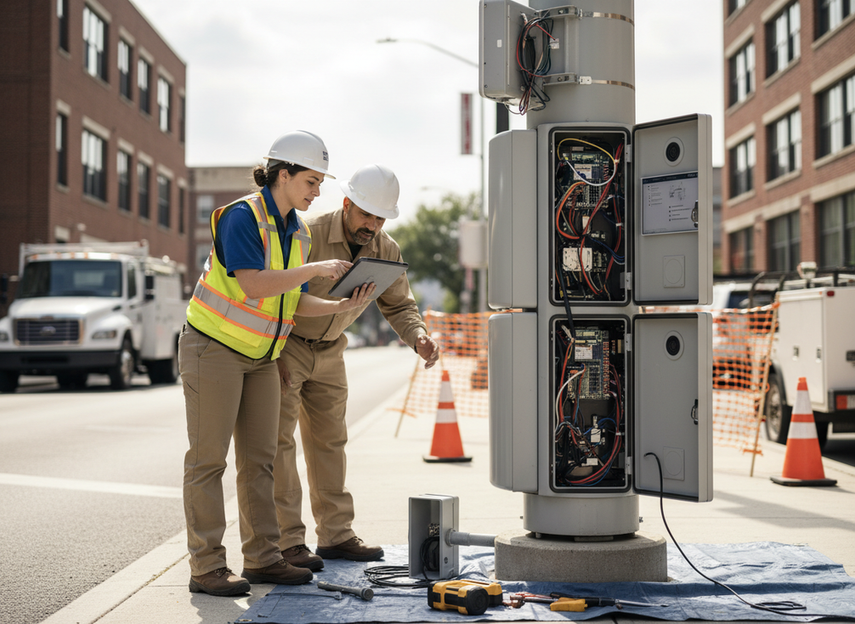
A smart LED pole can combine fixtures, controllers, radios, sensors, cameras, environmental devices, and sometimes charging or public safety features. That stack increases the number of parts that must work together. Lighting suppliers, network providers, software vendors, electrical contractors, and municipal IT teams may all touch the same asset.
That is why project complexity is not just technical. It is contractual and operational. If the city wants simple lighting modernization, a conventional LED retrofit may be the better fit. If the city wants a digital street infrastructure platform, smart poles can make sense, but only when the municipality is ready to manage multiple interfaces and long-term support obligations. For projects that move toward shared communications or sensor-heavy deployments, planners should expect more integration testing, more stakeholder coordination, and more follow-on maintenance questions. General industry framing from Comba USA reflects this broader system complexity.
What to Check First
Before choosing a deployment path, ask three questions:
- Does the city need lighting only, lighting plus a few controls, or a broader digital infrastructure platform?
- Which department will own the assets after acceptance: public works, IT, transportation, or a mix?
- What happens if one subsystem fails: does the whole pole fail, or can it be isolated?
If the answer to any of those is unclear, the best next step is usually a smaller pilot, a narrower feature set, or a phased rollout.
| Deployment Need | Better Starting Point | What To Check First | When The Recommendation Flips |
|---|---|---|---|
| LED replacement with basic controls | Conventional smart-lighting retrofit | Controller compatibility, dimming behavior, utility coordination | Flips to smart poles only if the city needs sensors or future attach points |
| Lighting plus a few sensors | Limited smart pole pilot | Data ownership, network handoff, maintenance responsibility | Flips to a broader platform only after pilot acceptance and support proof |
| Multi-agency digital street infrastructure | Full smart pole program | Governance, cybersecurity, service model, lifecycle cost | Flips back to phased deployment if ownership or integration is unsettled |
Where Interoperability Breaks Down
Interoperability problems usually appear at the seams: fixture to controller, controller to network, network to software, and software to municipal operations. A device can be technically compliant and still fail to integrate cleanly into the city’s actual operating environment.
That is why standards are useful, but not sufficient by themselves. TALQ 2.7.0 is worth checking when a project needs a common language for outdoor lighting management and multi-vendor coordination. Even then, it should be treated as a strong interoperability screen, not a guarantee that every device, dashboard, and maintenance workflow will work together without custom effort.
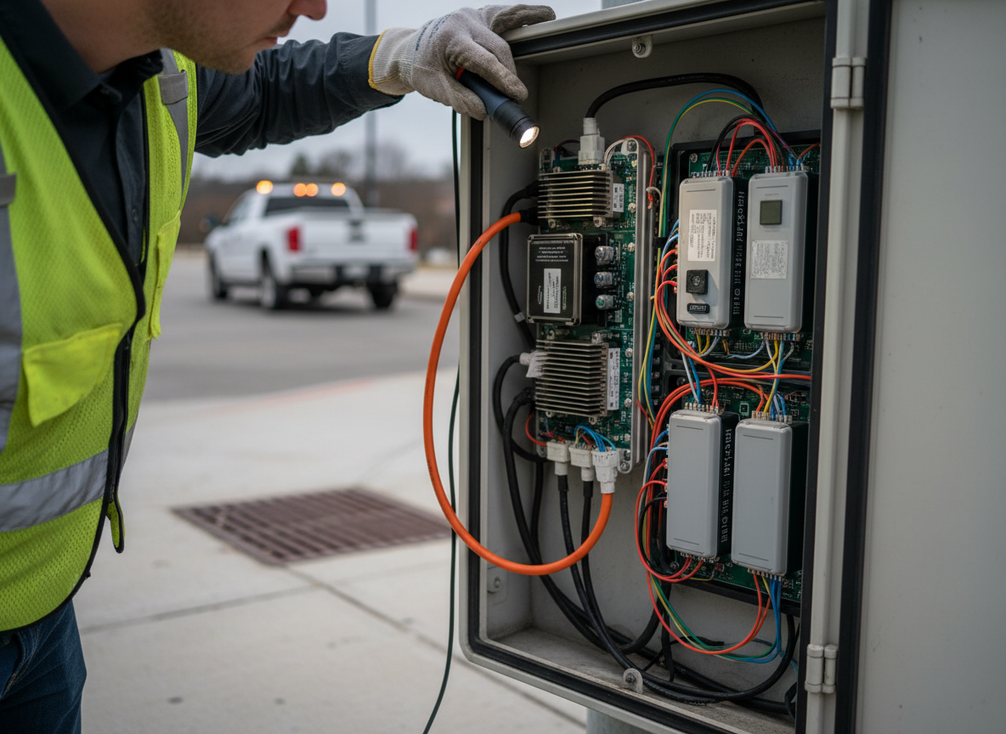
The same logic applies to Zhaga Book 18 and DALI-2. Both can reduce risk in bounded parts of the stack, especially around luminaires, control interfaces, and lighting behavior. But neither one proves that the full city deployment will be interoperable across vendors, software platforms, or field conditions.
A practical verification sequence helps keep that risk visible:
- confirm the component fit at the fixture and controller level
- check that interfaces and data formats match the city’s operating plan
- verify platform access, account control, and update paths
- test the full setup in the field before scaling citywide
In practice, breakpoints often include incompatible control protocols between fixtures and third-party devices, gateways that work in the lab but struggle in the field, firmware and software versions that drift after commissioning, sensor packages that create different data formats than the city expected, and field service processes that assume one vendor owns everything when the contract does not.
Background discussions in outlets such as Wiley and LinkedIn can help planners understand market themes, but they should stay background context rather than proof of project readiness.
Ownership and Maintenance After Installation
A smart pole is easy to specify and harder to support if ownership is vague. Once the project is accepted, someone must handle failures, replacement parts, software updates, cybersecurity patches, and warranty claims. If the city, a network operator, and a lighting contractor all believe a different party owns a problem, downtime will last longer than expected.
Maintenance planning should cover more than bulbs or fixtures. It should define who services the controller, who can reset the network device, who updates firmware, and who has permission to modify software settings. A city that plans to keep the poles for 15 to 20 years should ask whether the support model is equally durable.
Practical ownership questions include:
- Does the city own the pole, the control cabinet, and the data generated by attached devices?
- Is the network subscription bundled into the equipment price or billed separately?
- Who replaces a failed sensor after the warranty period?
- Can a different contractor service the pole without voiding support?
- What happens if the software platform is discontinued or acquired?
The best procurement language makes these answers explicit before purchase, not after deployment.
Network, Data, and Ownership Boundaries
Smart pole integration risks are often less about the pole itself and more about the boundary between physical infrastructure and digital service. Municipal planners should assume that the network, the devices, and the data may each have different owners, different lifecycles, and different legal obligations.
That distinction matters for cybersecurity, privacy, and continuity of service. A city may own the hardware but only license the software. It may own the data but not the transmission network. It may control the lights while a third party manages the sensors. Each model can work, but only if the boundaries are documented.
A good contract should clarify:
- what data is collected
- where the data is stored
- who can access it
- how long it is retained
- how it is transferred if the vendor changes
- how network outages affect lighting versus non-lighting functions
For many cities, the safer model is to separate essential lighting control from optional digital services. That way, if a camera, sensor, or analytics module fails, the lighting system still functions. This is especially important when the city is still building internal capability and does not yet have a mature IT support structure for street infrastructure.
A Practical Procurement Checklist
Use this checklist to reduce avoidable integration problems before issuing an RFP or selecting a rollout model:
- Define the minimum viable use case: lighting only, lighting plus controls, or multi-service smart pole.
- Require a system architecture diagram that shows every vendor, interface, and dependency.
- Ask which standards are supported and which are only partially supported.
- Treat TALQ 2.7.0, Zhaga Book 18, and DALI-2 as checkpoints, not finish lines.
- Specify who owns hardware, software licenses, network service, and data rights.
- Require a maintenance matrix that names the responsible party for each component.
- Define acceptance tests for commissioning, network handoff, and remote control.
- Confirm firmware update responsibilities and patch timelines.
- Ask for a pilot plan with success criteria before scaling citywide.
- Make sure the contract explains what happens when a vendor exits the market.
A concise procurement matrix can also help:
| Risk Area | Ask Before Award | Why It Matters |
|---|---|---|
| Interoperability | Which interfaces are open, documented, and tested? | Prevents hidden integration work later |
| Maintenance | Who responds to each failure mode? | Avoids support gaps after acceptance |
| Data | Who owns, stores, and can share the data? | Reduces legal and operational ambiguity |
| Network | What happens if connectivity fails? | Protects essential lighting service |
| Lifecycle | How long will parts, software, and support remain available? | Supports long-term municipal planning |
The practical next step is to review requirements, pilot criteria, and ownership questions before issuing an RFP or choosing a rollout path. That review should happen while the design is still flexible, not after equipment has already been selected.
Final Takeaway
Smart poles can be a useful municipal platform, but the project works best when technology fit, operating responsibility, and support terms are aligned. The most common smart pole integration risks come from assuming that hardware compatibility equals deployment readiness. In reality, cities need a clear view of interoperability, maintenance, data boundaries, and long-term ownership before scaling beyond a pilot.
FAQs
Are Smart Poles Better Than Conventional LED Retrofits?
Not always. If the city only needs efficient lighting and basic controls, a conventional LED retrofit is usually simpler and easier to support. Smart poles make more sense when the city has a defined need for sensors, networked services, or a broader digital infrastructure strategy.
Why Is TALQ 2.7.0 Important in Procurement?
TALQ 2.7.0 is useful because it helps planners check whether different vendors can speak a common language for outdoor lighting management. It reduces risk, but it does not guarantee that every field device, software dashboard, or municipal workflow will integrate without further validation.
Do Zhaga Book 18 and DALI-2 Guarantee Compatibility?
No. They are helpful standards for specific parts of the lighting stack, especially interfaces and control behavior, but they are not proof that the full system will work as a citywide deployment. Treat them as bounded checks within a larger acceptance process.
Who Should Own Smart Pole Data?
That depends on the project model, but the city should define the answer before award. At minimum, the contract should state who can access the data, where it is stored, how long it is kept, and what happens if the vendor changes.
What Is the Safest Way to Start a Smart Pole Program?
For most early-stage municipal planners, the safest approach is a limited pilot with clear success criteria, a documented maintenance matrix, and a contract that separates essential lighting from optional digital functions. That approach lowers risk before the city commits to a larger rollout.