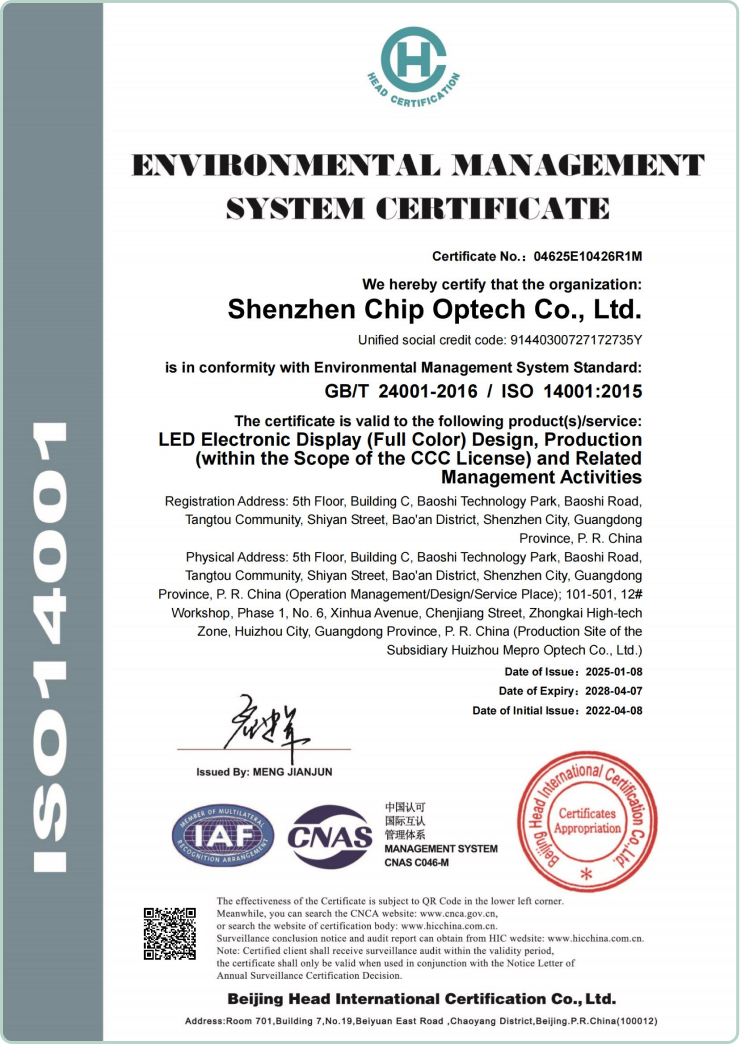
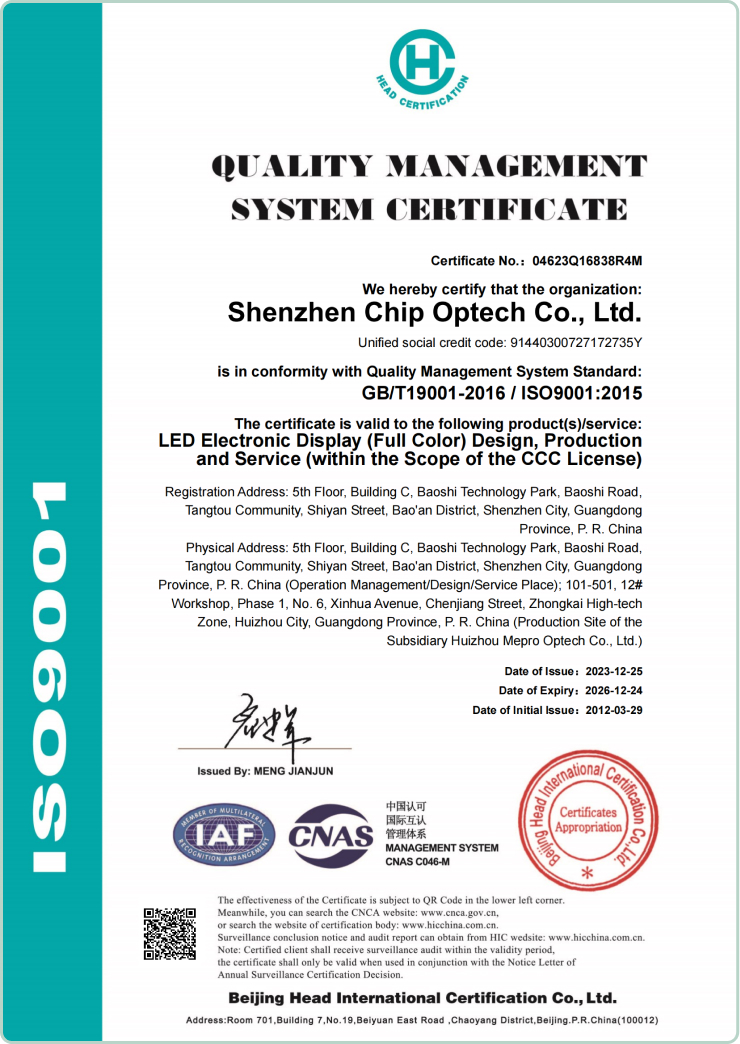
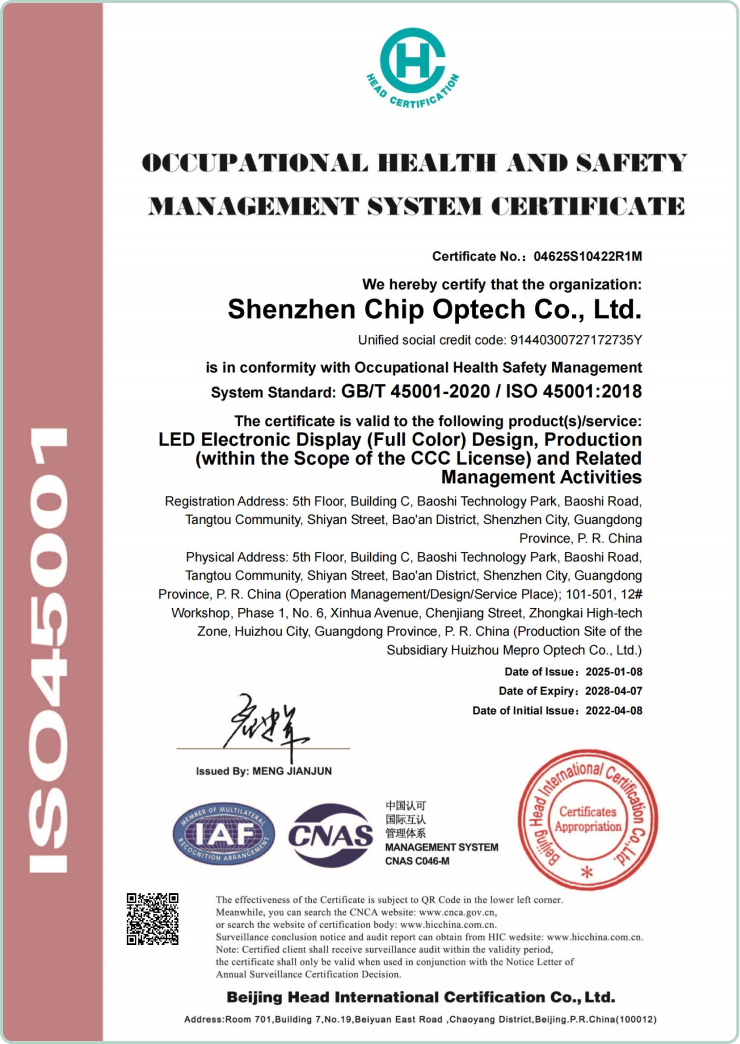
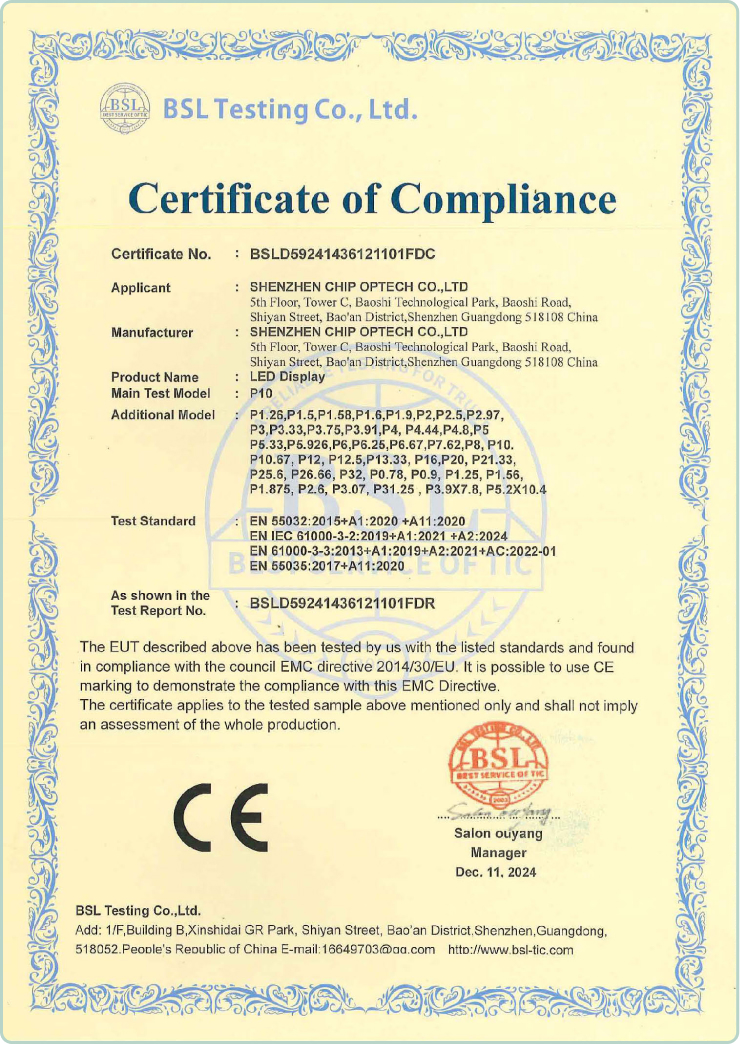
CE/FCC/ETL Certified LED Solutions with Local Stock in US & EU Hubs.
Sports Stadium LED Display Solutions
Amplify Every Champion Moment. Stadium-Grade LED That Delivers for Fans, Players, and Sponsors.

Amplify Every Champion Moment. Stadium-Grade LED That Delivers for Fans, Players, and Sponsors.
CE/FCC/ETL Certified LED Solutions with Local Stock in US & EU Hubs.
Amplify Every Champion Moment. Stadium-Grade LED That Delivers for Fans, Players, and Sponsors.
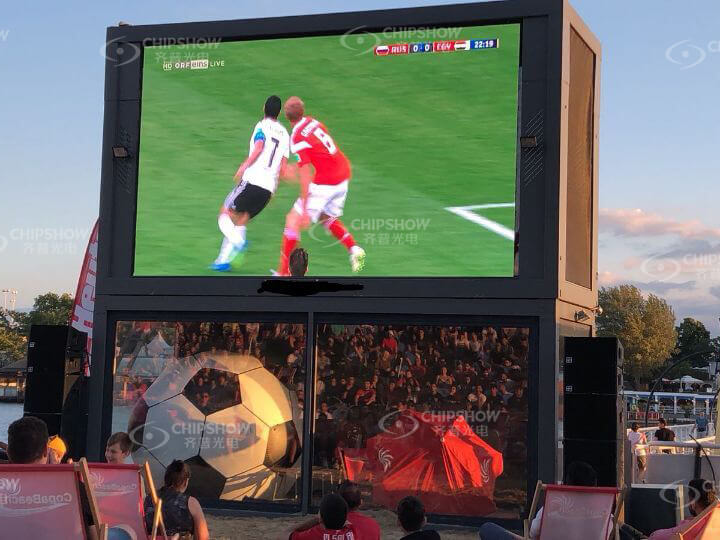
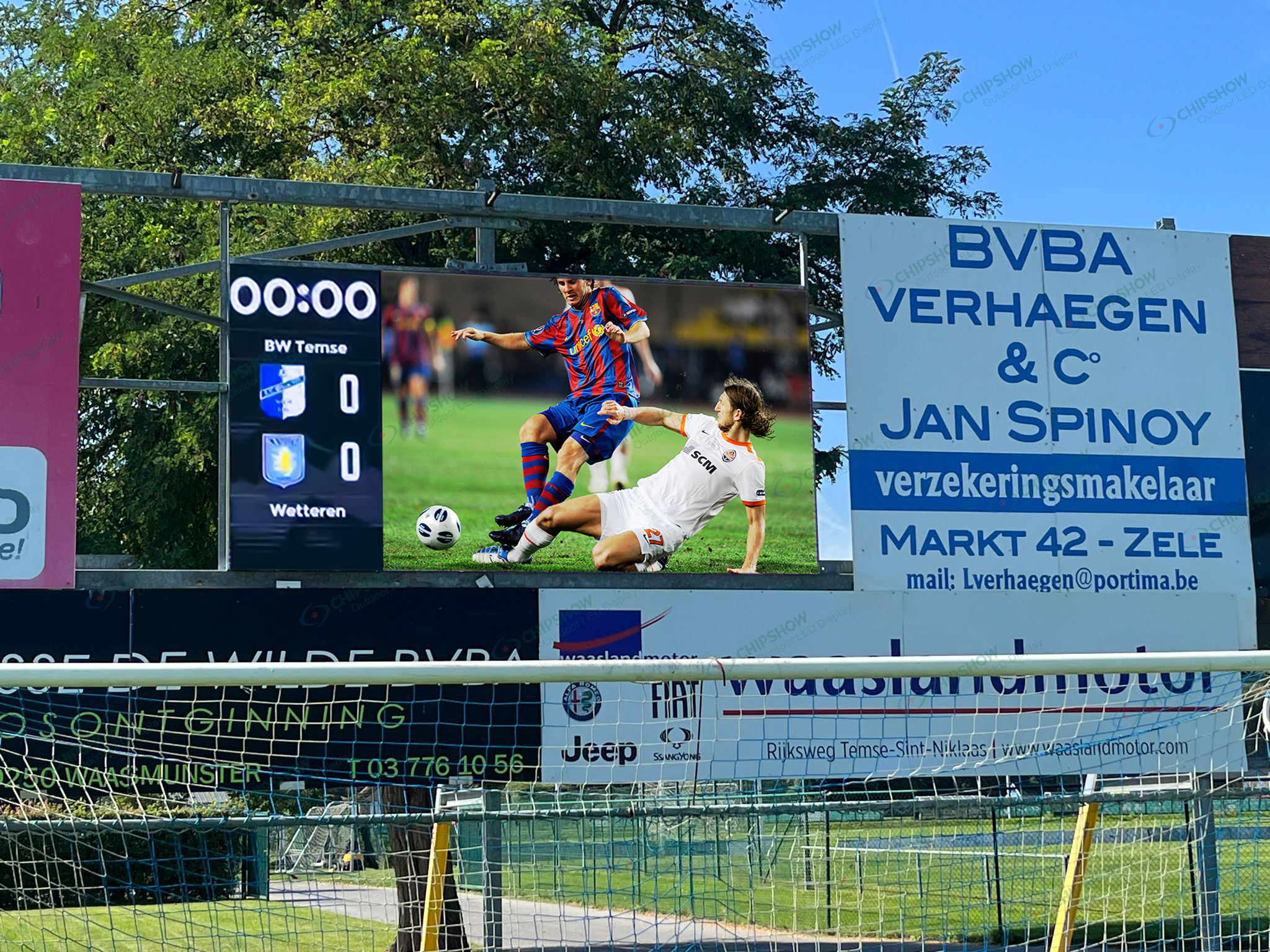
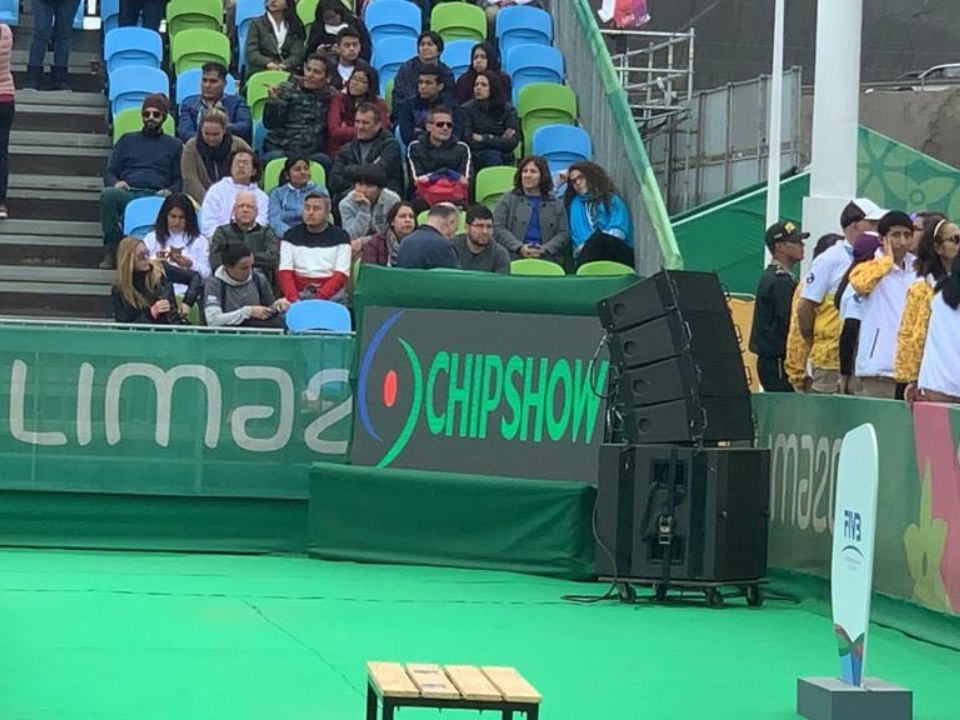
Benefit: Monetize every meter of the sideline — sponsor logos rendered crisp on broadcast cameras from any angle.
Recommended: P8–P10 · ≥7,000 nits · Rear/Front Service.
Suggested Series: C-Sport
Why: Soft-mask top cap protects players. Adjustable angle optimizes camera view. Quick-lock for fast deployment between events. 1280mm wide cabinet reduces seams.
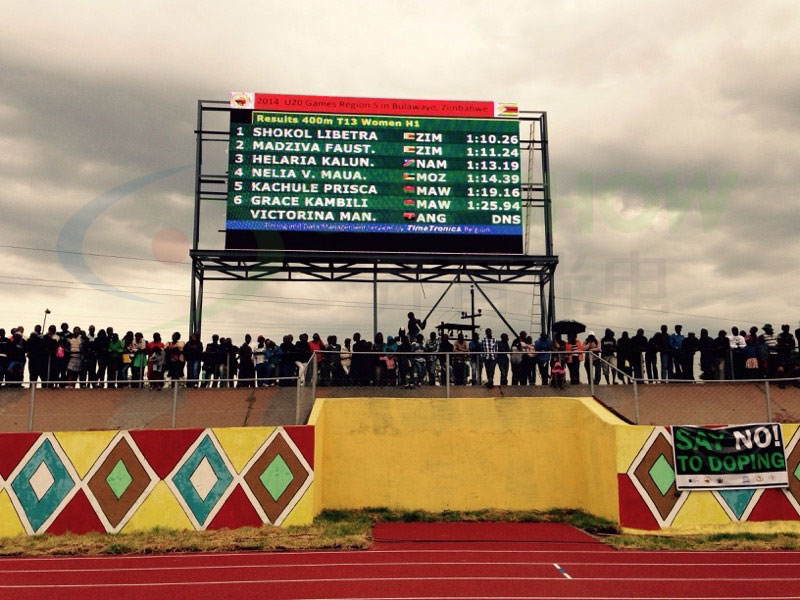
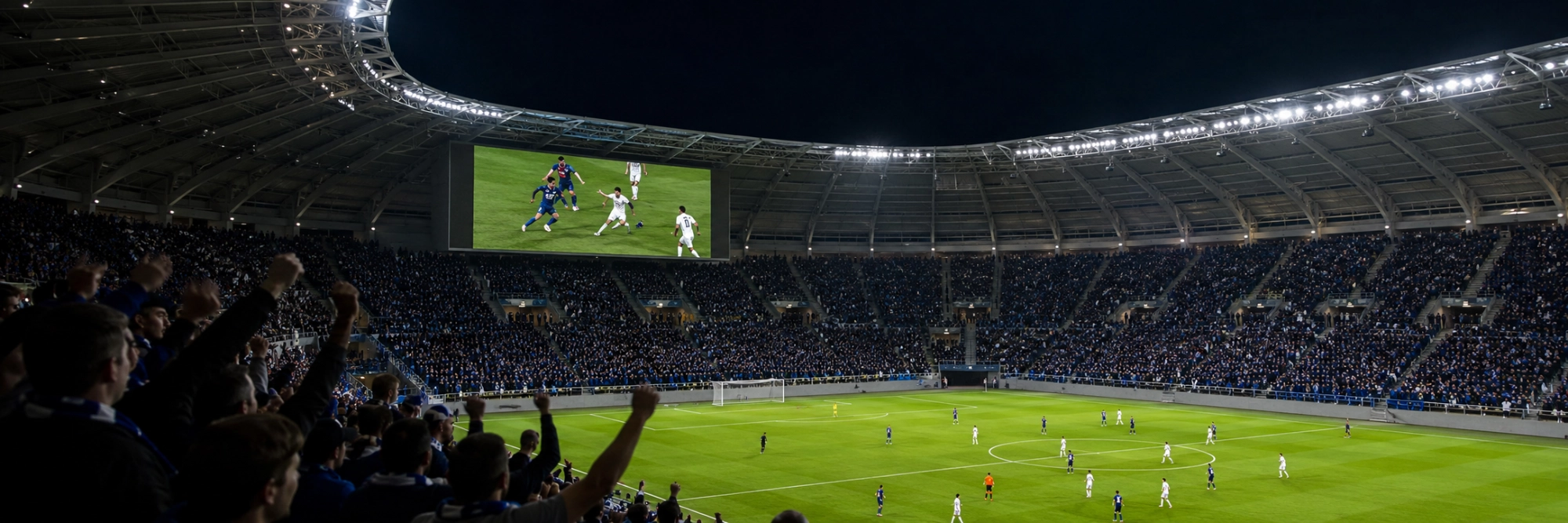
Benefit: The focal point for 50,000 fans — live scores, instant replays, and sponsor messaging in one massive canvas.
Recommended: P6–P10 · 6,000–10,000 nits · Front/Rear Service
Suggested Series: C-Fit / C-Slim
Why: High contrast visible under direct sun. Lightweight cabinet reduces structural steel load. IP65 weatherproof for year-round outdoor operation.
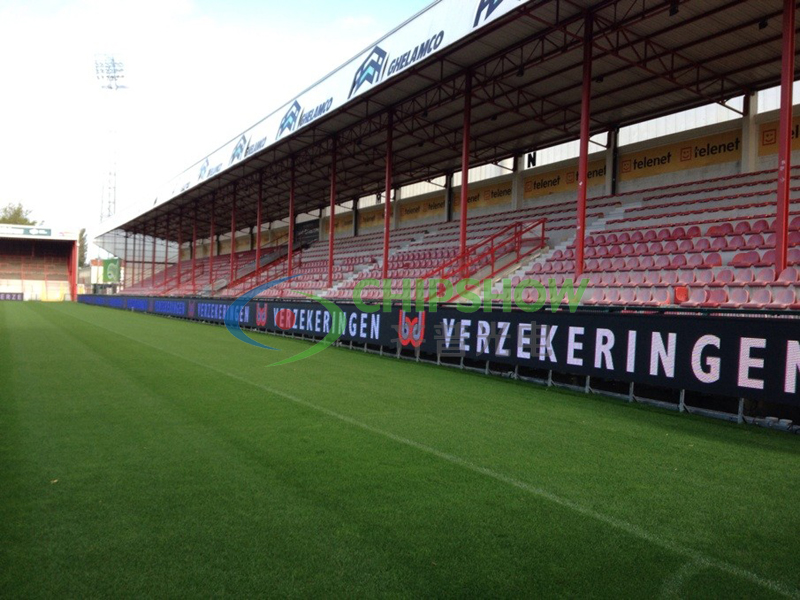
Benefit: Engage upper-tier fans with scrolling stats and sponsor content — turn dead fascia space into ad inventory.
Recommended: P8–P10 · High Brightness · Rear Service
Suggested Series: C-Sport
Why: Seamless length for continuous visuals. High refresh for smooth text scrolling. Slim profile fits existing fascia structures without added reinforcement.
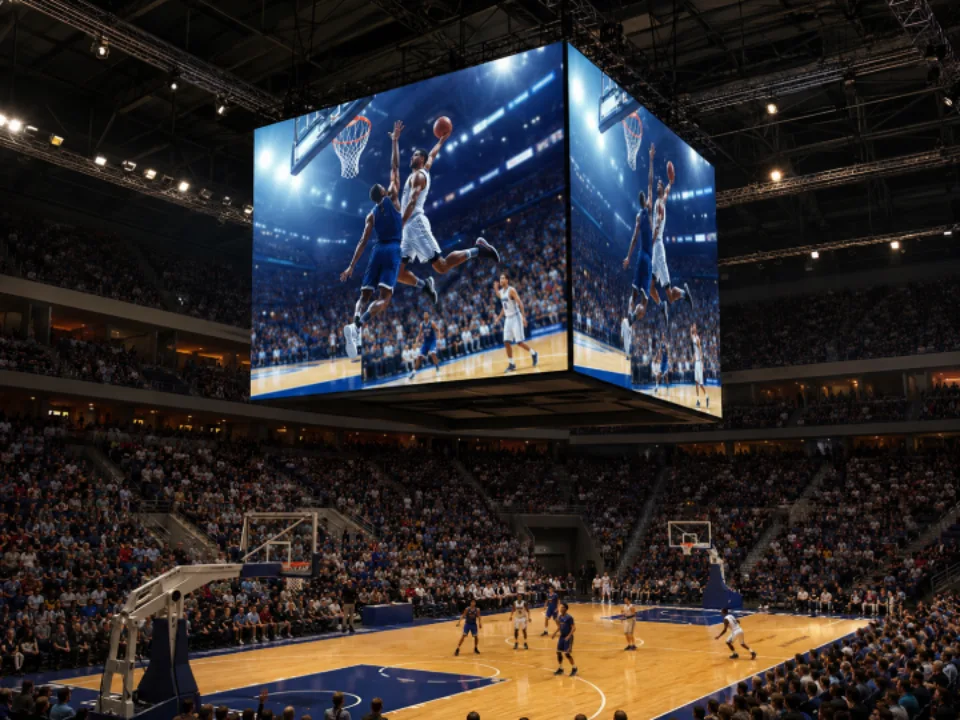
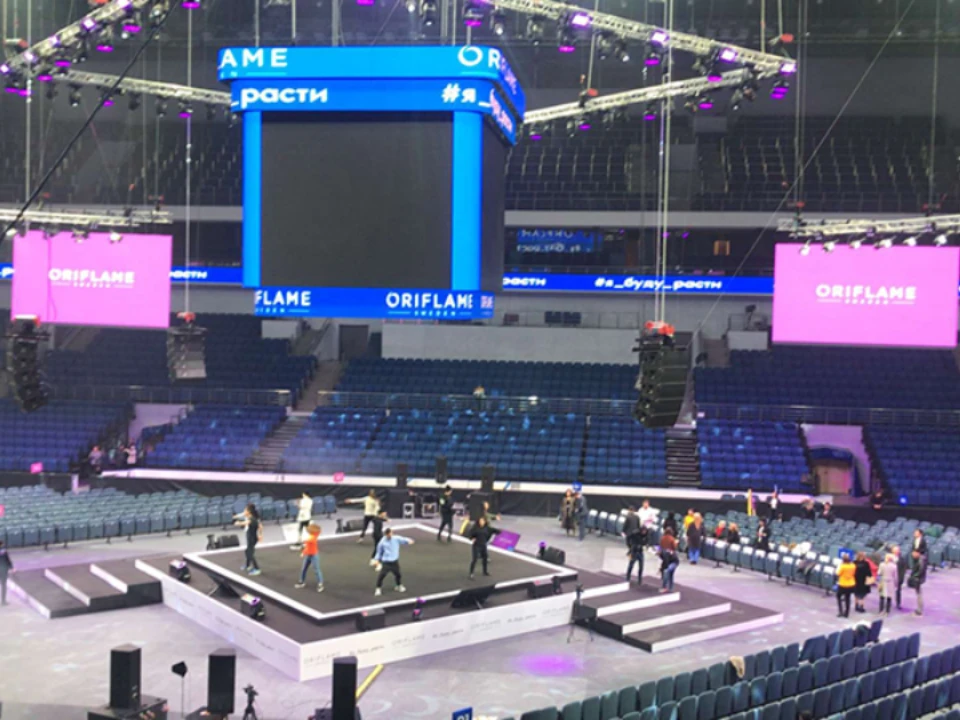
Benefit: 360-degree visibility for arena spectators — every seat gets the replay, no matter where you sit.
Recommended: P3.9–P5.9 · Indoor Brightness · Front Service
Suggested Series: C-Shine
Why: Fine pitch for HD at closer seats. Lightweight frame for safe hanging load. Anti-Moire coating for camera-friendly broadcast.
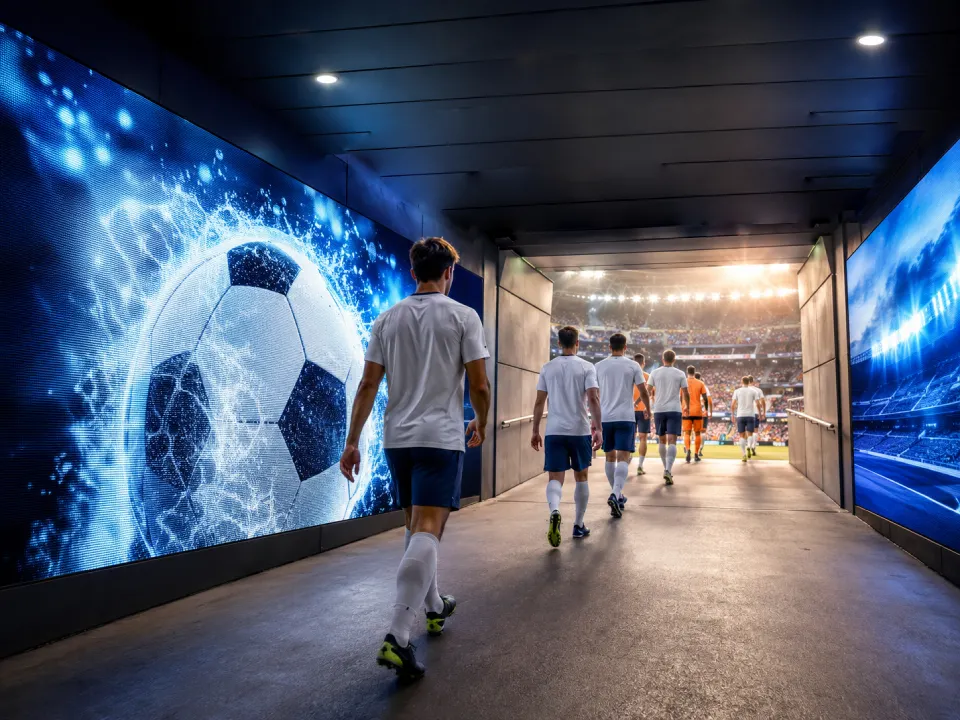
Benefit: Premium branding real estate for VIP zones and broadcast camera hot spots — every player walkout is a sponsor moment.
Recommended: P2.5–P5 · Standard Brightness · Front Service
Suggested Series: C-Fit / C-Pad
Why: Impact resistant for high-activity areas. Low heat emission for player comfort. Silent fanless operation.
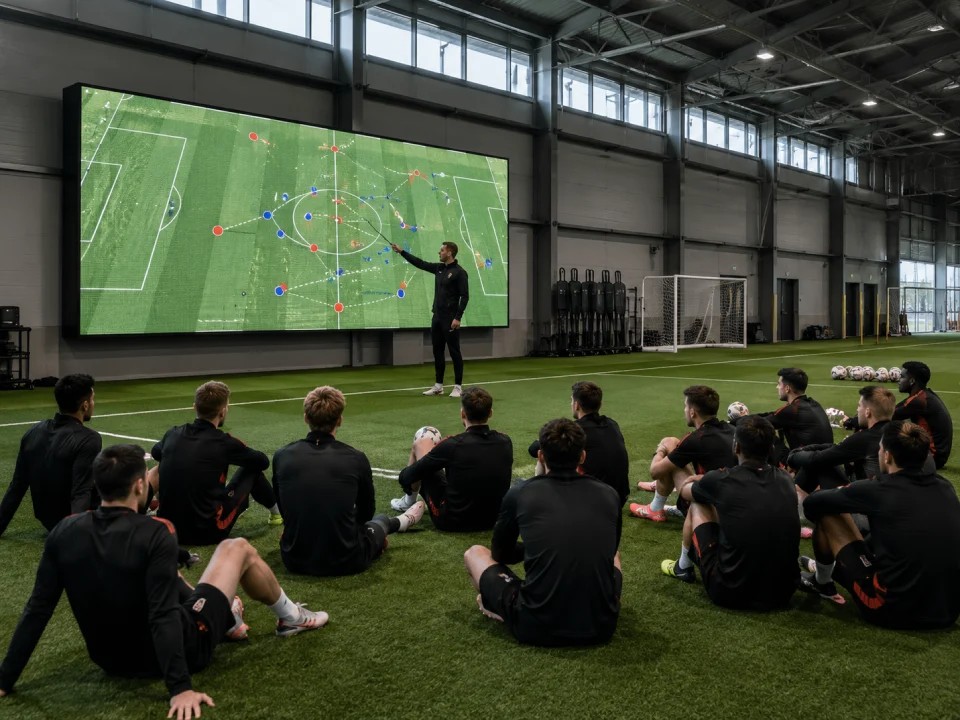
Benefit: Tactical analysis and club communication — coaches brief the squad on-screen, no paper printouts needed.
Recommended: P6–P10 · Outdoor Brightness · Rear Service
Suggested Series: C-Easy / C-Smart
Why: Cost-effective for budget-conscious clubs. Simple content update via USB or network.





Beyond the Basics: How to Slash Union Labor, Cut OpEx, and Secure Zero-Blackout Broadcasts
When evaluating stadium LED perimeter screens, many venue operators fall into a common trap: they believe they are merely purchasing a digital display. But seasoned integrators know the industry truth: You don’t just pay for the screen; you pay for the power to run it and the union labor to install it.
For years, the industry standard has settled for “good enough”—relying on heavy, standardized cabinets and brute-force brightness. However, operating a modern sports venue demands much more. Upgrading to next-generation systems is no longer about comparing basic pixel pitches; it is about significantly lowering your Total Cost of Ownership (TCO) and protecting your assets.
Here is how modern engineering is redefining the professional sports LED landscape.
Before investing in a new system, it is crucial to understand the “hidden taxes” imposed by legacy LED technologies.
The 960mm Penalty: Traditional 960mm steel or aluminum cabinets are common, but deploying them across a 200+ meter stadium perimeter results in a high volume of physical seams. This not only risks breaking the visual continuity of high-value sponsor logos but also multiplies structural load.
The Labor Drain: A higher cabinet count means exponentially more locks to secure and data cables to connect. In markets where union labor is billed by the hour, every extra minute spent aligning small cabinets drains your deployment budget.
The Efficiency Myth: Legacy solutions often recommend “5,000-nit brightness everywhere.” This blanket approach forces venue operators to run power-hungry screens even in shaded stadium zones, leading to massive and entirely avoidable electricity bills over a five-year lifespan.
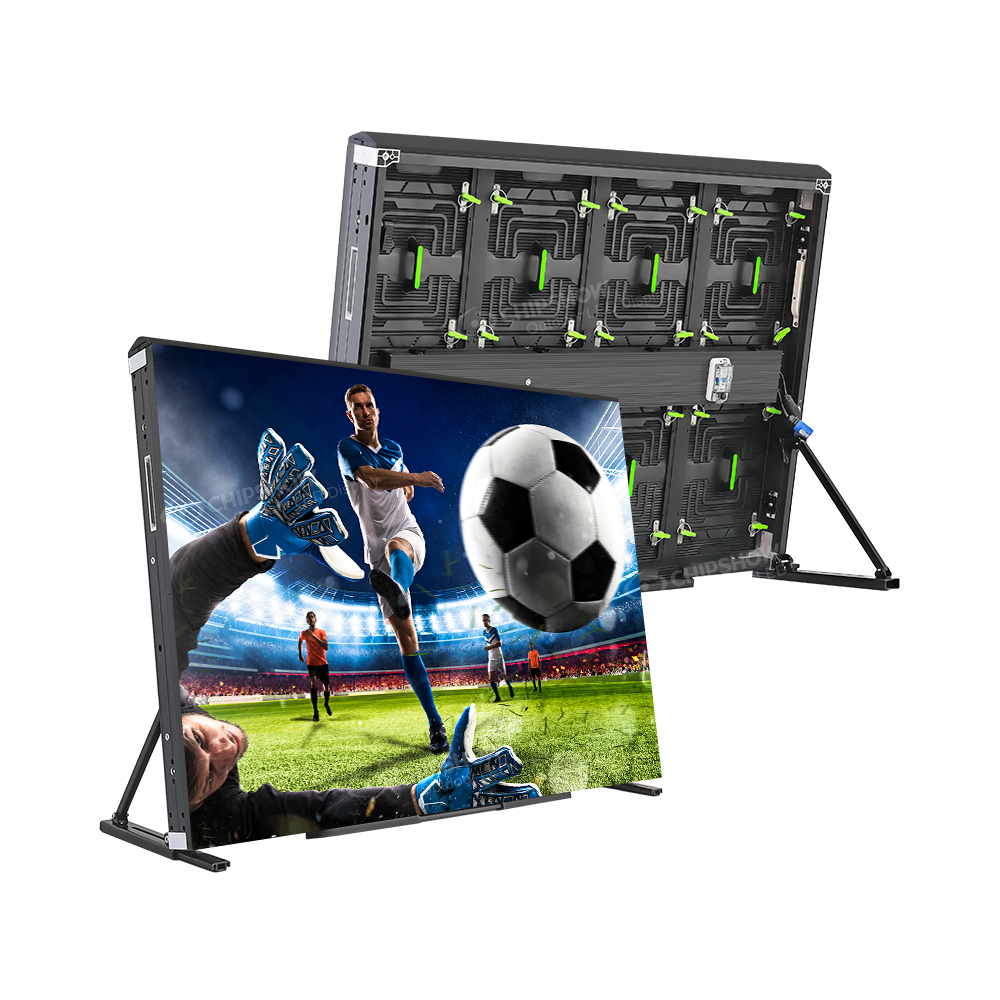
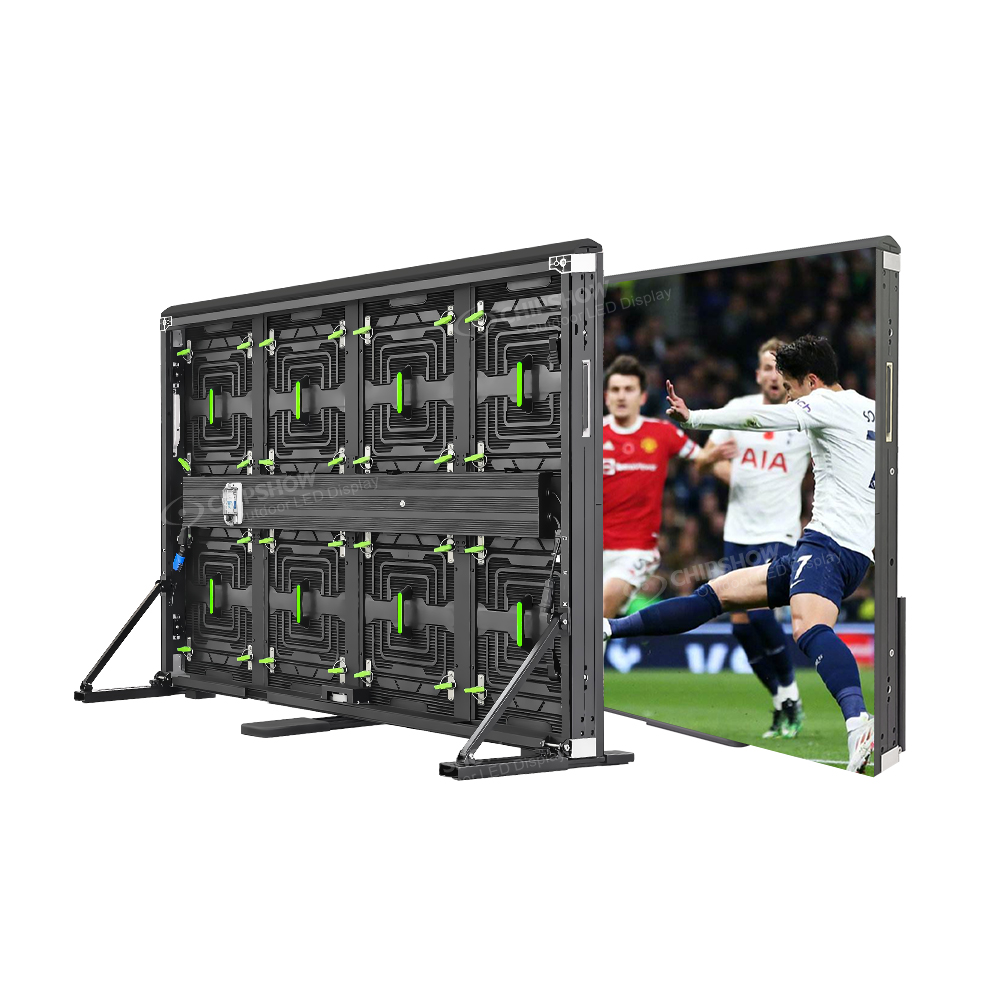
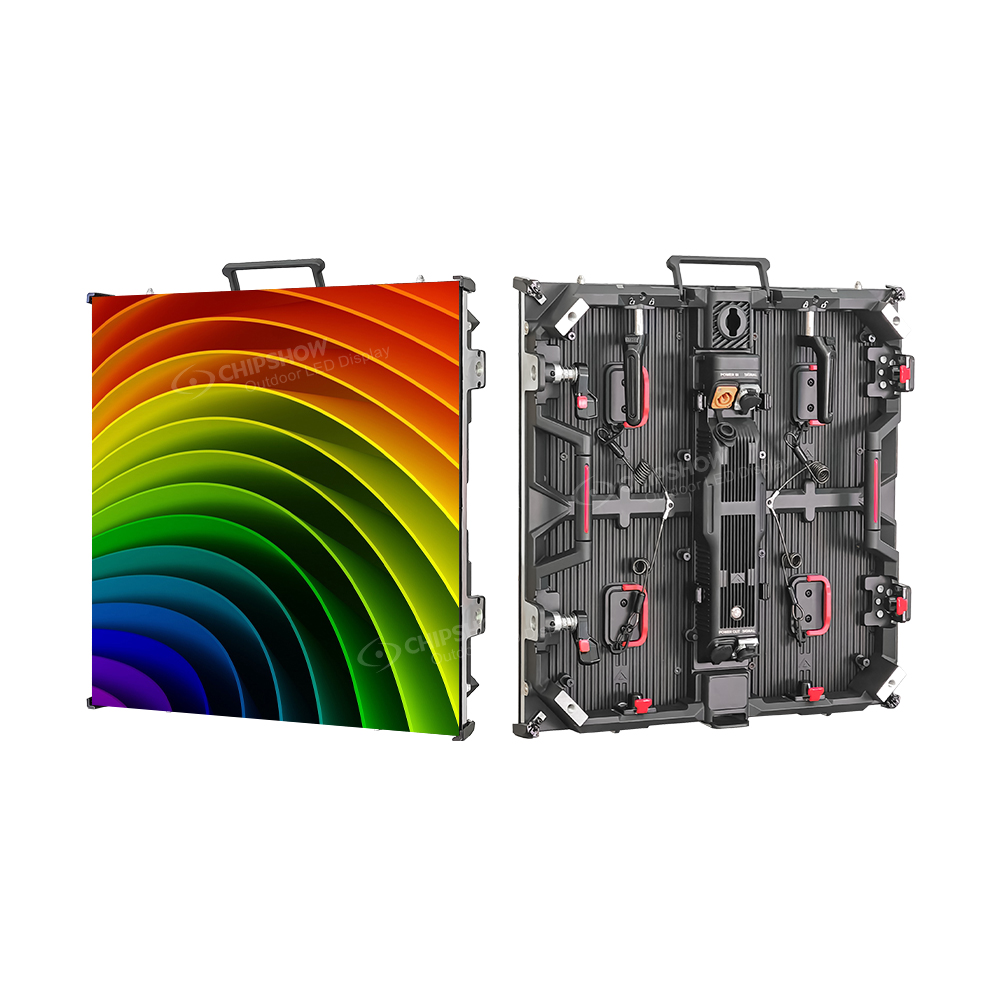
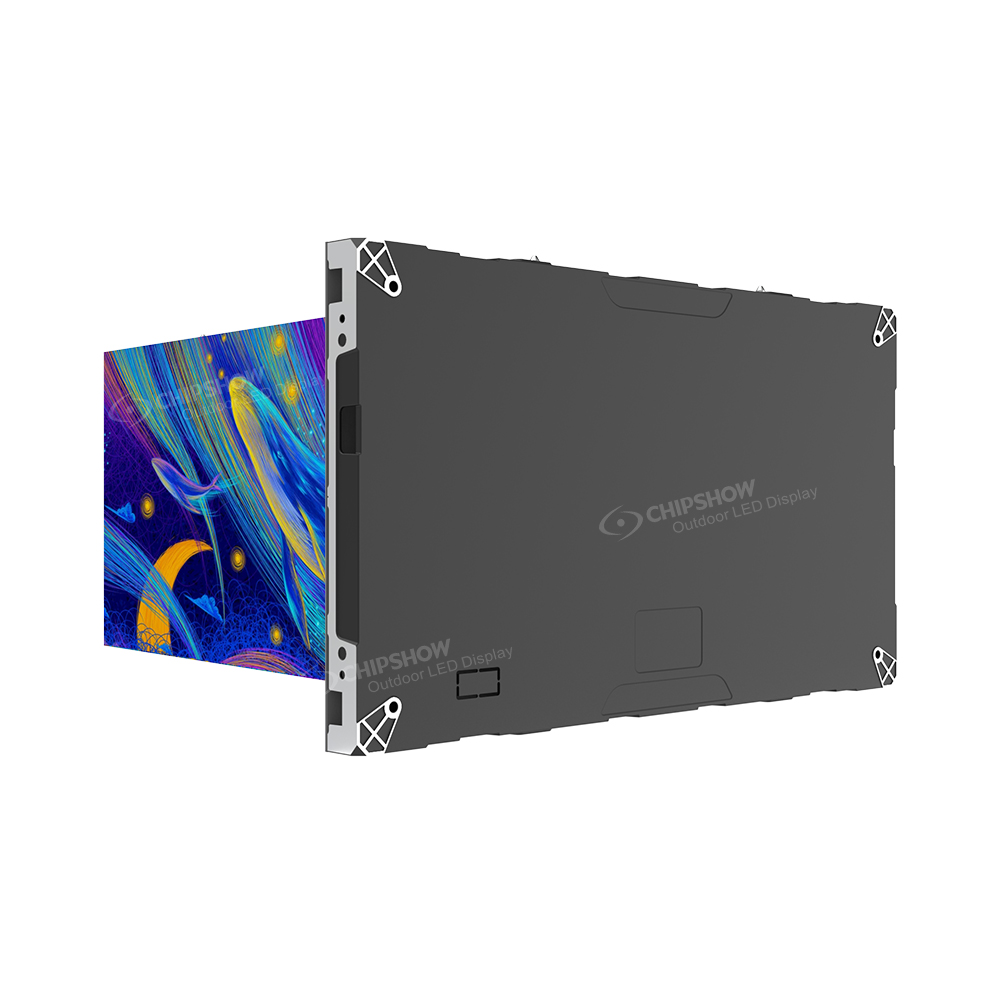
Next-generation perimeter screens, like the Chipshow C-Sport Series, elevate basic hardware specs into strategic business advantages.
2.1 Liability Reduction & Asset Protection
Player safety is a baseline, but comprehensive asset protection is a financial imperative. The C-Sport modules are equipped with a shock-absorbing soft rubber mask and a top polyurethane (PU) pillow. This dual-protection design cushions high-speed impacts to prevent player injuries—mitigating venue liability—while simultaneously protecting the delicate LED components from being shattered by high-velocity impacts.
2.2 The Zero-Blackout Guarantee for Broadcasts
During top-tier events, a black screen isn’t just an embarrassment; it is a breach of sponsorship contracts. While a high refresh rate of ≥3,840 Hz keeps graphics artifact-free on 4K cameras, true broadcast reliability requires redundancy. The C-Sport series features an optional dual-backup configuration for both power and signal. If a primary line fails, the system switches to the backup seamlessly in milliseconds, ensuring zero downtime and protecting sponsor revenue.
This is where next-generation architecture actively recoups your investment.
3.1 The Math Behind the 1280mm Chassis
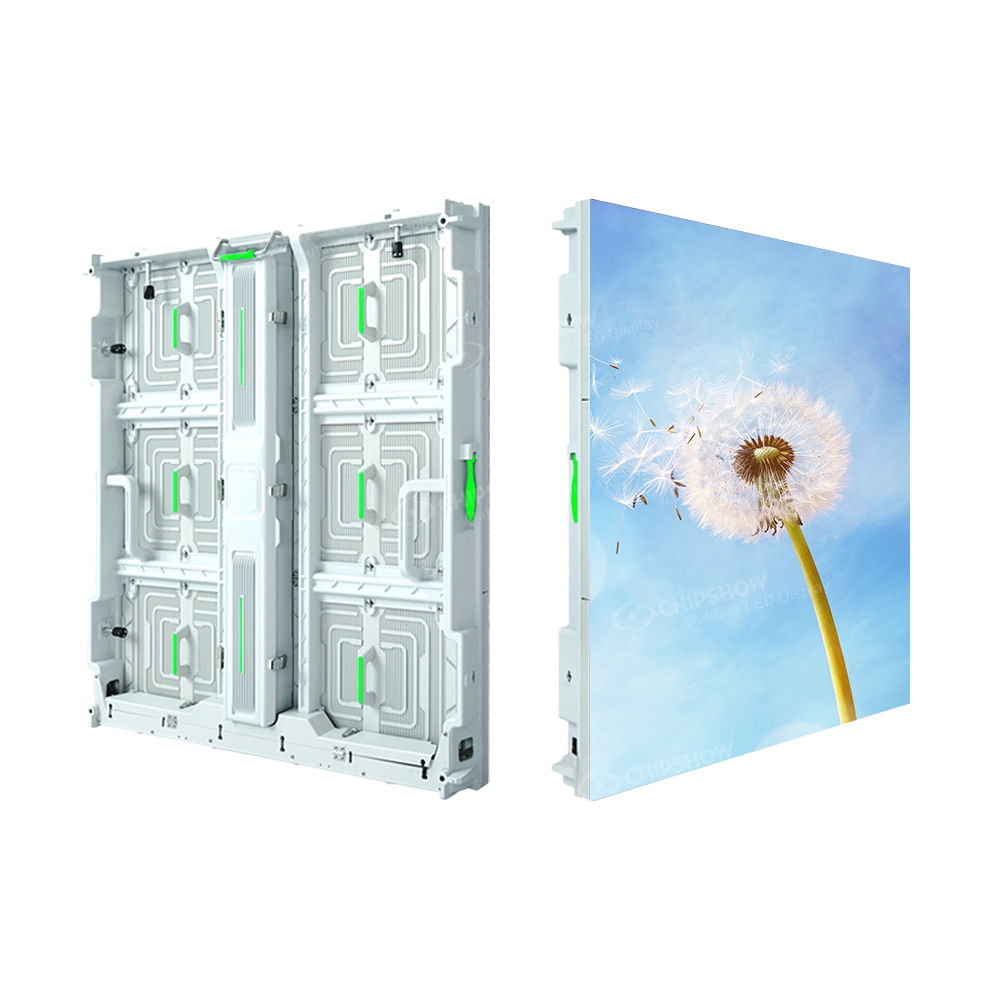
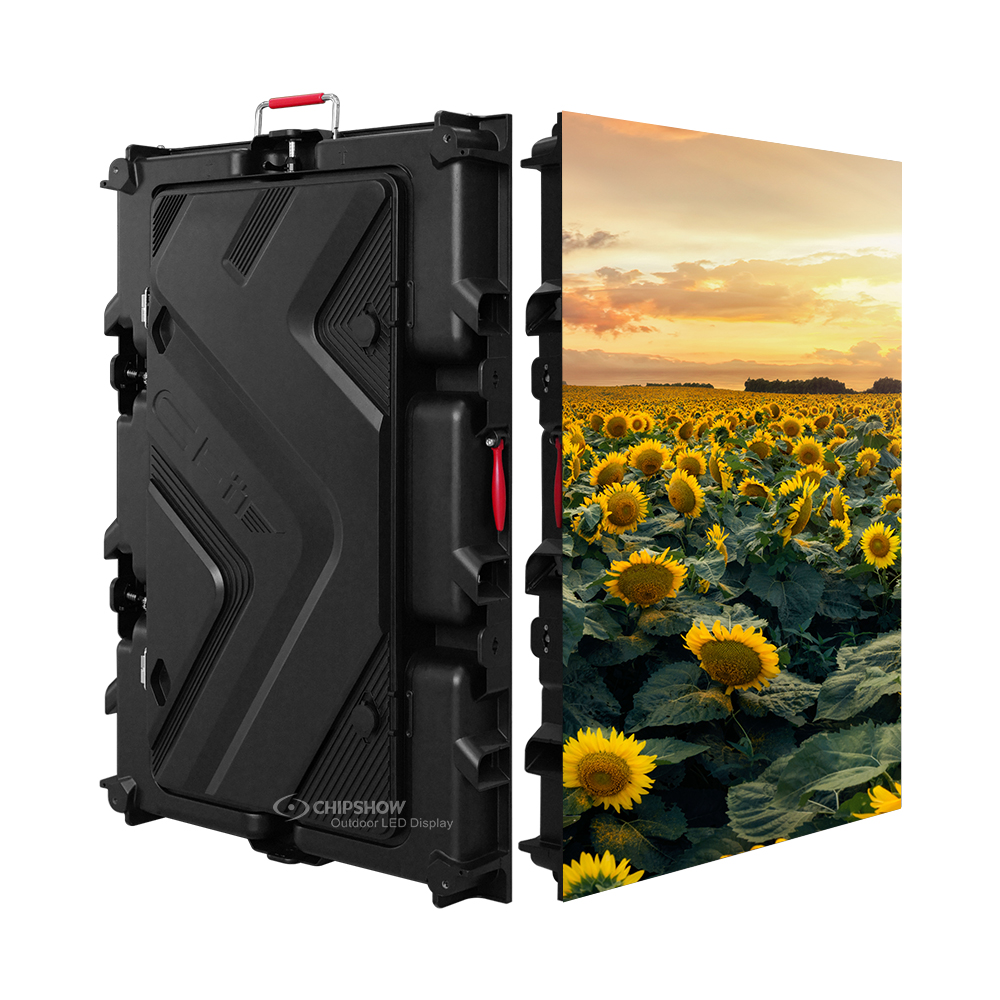
The C-Sport features an extra-wide 1280 × 900 × 100 mm (50.4″ × 35.4″ × 3.9″) cabinet. Let’s calculate the impact on a standard 250-meter football pitch:
Using traditional 960mm cabinets: ~260 units required.
Using 1280mm ultra-wide cabinets: ~195 units required.
By covering more perimeter length per unit, the 1280mm chassis cuts physical seams and cabling labor by roughly 25%. For AV integrators and venue operators, this enables significantly faster deployment and slashes costly union labor hours. Furthermore, reducing the cabinet count by 25% inherently eliminates 25% of potential hardware failure points.
3.2 The “Mix & Match” Blueprint (Slashing OpEx)
Forcing 10,000-nit screens into shadowed areas is a waste of capital and energy. Chipshow introduced a strategic hybrid approach: You can optimize budgets by deploying up to 10,000-nit ICE cabinets on sun-facing touchlines and low-power SMD in shaded zones.
Sun-Facing: The ICE Ultra-Bright variant delivers up to 10,000 nits with a focused beam, ensuring brand visibility cuts through the harshest daylight.
Shaded Zones: The Wide-View SMD model operates at a maximum power of just ≤470 W/m², dramatically lowering monthly electricity bills.
Because both models share the exact same 50.4-inch frame, they maintain a flawless, unified broadcast appearance. This allows venues to optimize their procurement budget without sacrificing visual uniformity.
Before signing off on a major perimeter LED upgrade, ask potential suppliers these four critical questions to separate legacy tech from next-gen solutions:
“Do you offer an ultra-wide 1280mm (50.4″) cabinet to actively reduce our union labor and installation time?”
“Can you provide a visually unified ‘Mix & Match’ hardware solution (high-bright for sun, low-power for shade) to optimize our initial budget and long-term electricity costs?”
“Is a millisecond-switching dual-backup system (power & signal) available to prevent catastrophic live broadcast blackouts?”
“Are impact-absorbing interfaces (Soft Masks and PU Pillows) integrated without compromising camera viewing angles?”
Scenario A: Professional Football Touchlines
The Challenge: High-stakes broadcasting, direct sun exposure on the East stand, and strict league safety mandates.
The Solution: Deploy the C-Sport ICE configuration on the sun-facing side and standard SMD on the shaded side.
The ROI Impact: The hybrid deployment cuts initial procurement costs while delivering 10,000-nit visibility where needed. Soft masks ensure elite player safety, and the 32.5 kg lightweight aluminum alloy design prevents structural overload.
Scenario B: Multi-Sport & Rental Events
The Challenge: Frequent venue changeovers and expensive hourly setup labor.
The Solution: Utilizing the 1280mm fast-build frame.
The ROI Impact: The 50.4″ wide frame accelerates matchday setup, reducing union labor time significantly.
When choosing a stadium LED screen, buying into legacy technology means paying more over the lifetime of the product through higher power bills, slower installation times, and broadcast risks.
By demanding 1280mm ultra-wide cabinets, mixable brightness technologies, dual-backup reliability, and sub-470 W/m² power consumption, you aren’t just buying a digital screen—you are upgrading your stadium’s entire operational efficiency.
Ready to see the math for your venue? Contact our engineering team today to calculate how much the C-Sport “Mix & Match” strategy can save on your procurement budget and OpEx.
Q: How much does a professional stadium perimeter LED display cost in the US/Europe?
A: The cost varies heavily based on the technology used. However, rather than looking at flat per-meter costs, venues should consider Total Cost of Ownership (TCO). By utilizing the Chipshow C-Sport “Mix & Match” strategy—deploying premium ICE modules (up to 10,000 nits) only on sun-facing sides and energy-efficient SMD modules (≤470 W/m²) elsewhere—venues can optimize procurement budgets by up to 15-20% while sharing the exact same 1280x900mm (50.4″x35.4″) chassis.
Q: Why are 1280mm (50.4-inch) LED cabinets better than 960mm cabinets for outdoor stadiums?
A: A 1280mm cabinet is significantly wider than a standard 960mm cabinet. This covers more perimeter length per unit, reducing the total number of cabinets needed. It cuts physical seams and cabling labor by roughly 25%, enabling faster deployment and lowering costly union labor hours for North American and European integrators.
Q: Do LED perimeter boards overheat during summer outdoor matches?
A: Legacy steel cabinets often suffer from heat retention. Next-generation systems like the C-Sport utilize a lightweight aluminum alloy cabinet weighing just 32.5 kg (71.7 lbs), paired with a thin aluminum power box for superior heat dissipation. This ensures stable component aging and reliable performance even during high-temperature daytime events.