


Cabinet weight is an often underestimated cost driver in outdoor LED projects. Most buyers compare pixel pitch, brightness, and screen area first. But after the purchase order is signed, cabinet weight frequently pushes installation budgets off track. Every extra kilogram per cabinet forces upgrades across the project chain: heavier steel structures, larger cranes, bigger crews, longer permit reviews, and higher shipping fees.
How Does Cabinet Weight Affect Every Stage of an Outdoor LED Installation?
Cabinet weight does not inflate a single line item. It adds cost across every phase of a project, from the foundation pour to the final power-up.
Stage 1: How Cabinet Weight Drives Up Steel and Foundation Costs
The steel support structure is often the largest single installation expense. According to aggregated industry cost benchmarks, steel structures for outdoor LED billboards range from $25,000 to over $100,000. The primary variables are screen total weight, mounting height, and wind load.
A traditional steel cabinet at 40 to 60 kg/sqm (88 to 132 lb/sqm) demands:
- Thicker rectangular tubing, typically 40×80 mm (1.6 x 3.1 in) profiles or larger
- Deeper concrete foundations
- More anchor points and connection hardware
A lightweight cabinet at 25 to 35 kg/sqm (55 to 77 lb/sqm) reduces all three requirements. For a 50 sqm (540 sq ft) billboard, the difference between these two weight classes can add 800 to 1,500 kg to the total structural load.
Buildings with existing exterior walls face an additional constraint. Lightweight drywall or metal-frame facades often cannot support heavier displays. If the chosen cabinet exceeds the wall’s rated load capacity, the project scope expands to include structural reinforcement, adding weeks and thousands of dollars before a single panel is mounted.
Stage 2: How Weight Determines Your Crane Rental Cost
Crane selection follows weight thresholds, not a linear scale.
| Screen Total Weight | Crane Type | Estimated Day Rate |
|---|---|---|
| Up to ~800 kg (1,760 lb) | Standard mobile crane | $1,500 to $2,500 |
| ~2,500 kg (5,500 lb) | Heavy-duty crane | $4,000 to $8,000 |
Crossing a threshold does not add 10% to the crane bill. It can double or triple it. Heavier panels also require slower, more controlled lifts. Each additional hour of crane operation adds to both equipment rental and crew standby costs.
Stage 3: How Weight Determines Crew Size and Labor Cost
Certified high-altitude installation specialists in Western Europe and North America typically bill $60 to $120 per person per hour. Cabinet weight significantly influences crew size:
- Under 10 kg (22 lb) per cabinet: Two-person crew handles positioning efficiently
- 20 to 25 kg (44 to 55 lb) per cabinet: Two-person crew remains standard
- Above 25 kg (55 lb) per cabinet: EU workplace safety guidelines recommend mechanical assistance or additional handlers to reduce injury risk. In practice, most installation teams use a minimum four-person crew for manual lifting at height above this threshold.
Advanced magnesium alloy designs have reduced compact-format fixed-installation cabinets to approximately 7.5 kg per unit. At this weight class, single-technician handling becomes feasible in many ground-level or low-height configurations, significantly reducing labor requirements compared to traditional fixed-installation cabinets.
Stage 4: How Cabinet Weight Increases Your Permit and Engineering Costs
In most European and North American cities, outdoor sign installations above certain weight thresholds require a stamped structural engineering review (a formal assessment signed off by a licensed structural engineer). Typical cost breakdown:
- Structural engineering review: $2,000 to $5,000 per project
- Permit fees: $400 to $2,500
- Additional triggers for heavy installations: design review hearings, public comment periods, third-party inspections
Industry forum discussions among sign professionals consistently report that permit and engineering costs sometimes exceed the cost of the sign hardware itself. Lighter cabinets that fall within a building’s existing load allowance may qualify for a simplified permit process, saving both money and weeks of administrative delay.
What Makes a Lightweight Outdoor LED Display Cabinet?
Not every cabinet marketed as “lightweight” delivers meaningful installation savings. The key factor is whether the material and structural design achieve a viable balance of strength, thermal management, and reduced mass.
Magnesium Alloy vs. Die-Cast Aluminum vs. Steel
| Material | Typical Cabinet Weight (960×960 mm / 38×38 in) | Typical Weight per sqm | Corrosion Resistance | Relative Unit Cost |
|---|---|---|---|---|
| Steel (galvanized) | 40 to 55 kg (88 to 121 lb) | 40 to 60 kg/sqm | Moderate (requires coating) | Lowest |
| Die-cast aluminum | 25 to 35 kg (55 to 77 lb) | 27 to 38 kg/sqm | High | Medium |
| Magnesium alloy | 25 to 28 kg (55 to 62 lb)* | 23 to 30 kg/sqm | High | Highest |
*Compact-format magnesium alloy cabinets (such as 480×640 mm /19×25 in) can weigh as little as 7.5 kg per unit.
Steel cabinets remain a common choice for large fixed outdoor billboards due to their low unit cost. The weight reduction offered by aluminum and magnesium alloy creates cumulative savings across the installation chain: lighter support structures, smaller cranes, fewer crew members, and lower shipping costs.
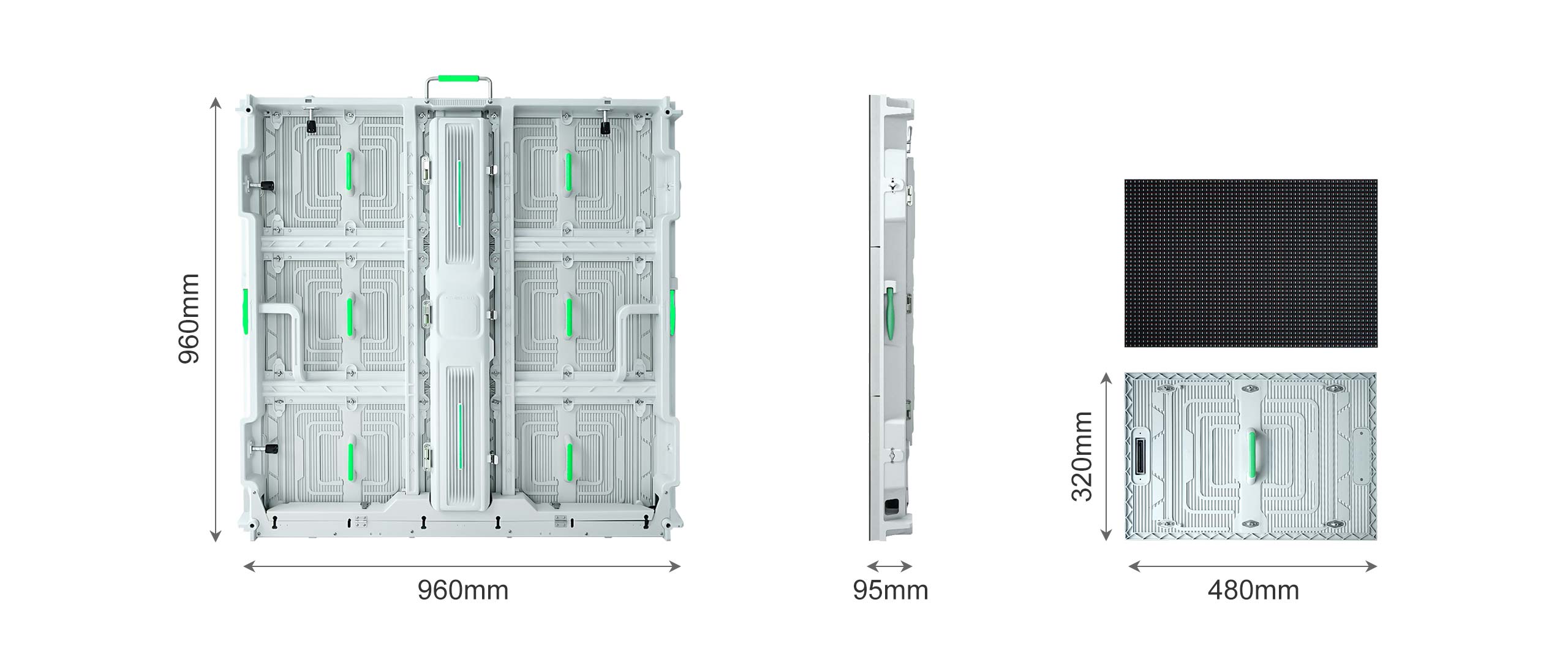
A standard 960×960 mm (38×38 in) magnesium alloy cabinet can be approximately 15 kg lighter than a comparable steel unit. Smaller 480×640 mm (19×25 in) magnesium alloy cabinets weigh as little as 7.5 kg, breaking the traditional assumption that fixed-installation cabinets are inherently heavy.
How Cabinet-Level Design Reduces Weight Without Sacrificing IP65 Protection
Effective lightweight cabinet design involves more than thinner walls:
- Internal structural optimization distributes load without excess material
- Integrated heat dissipation channels maintain thermal performance at reduced mass
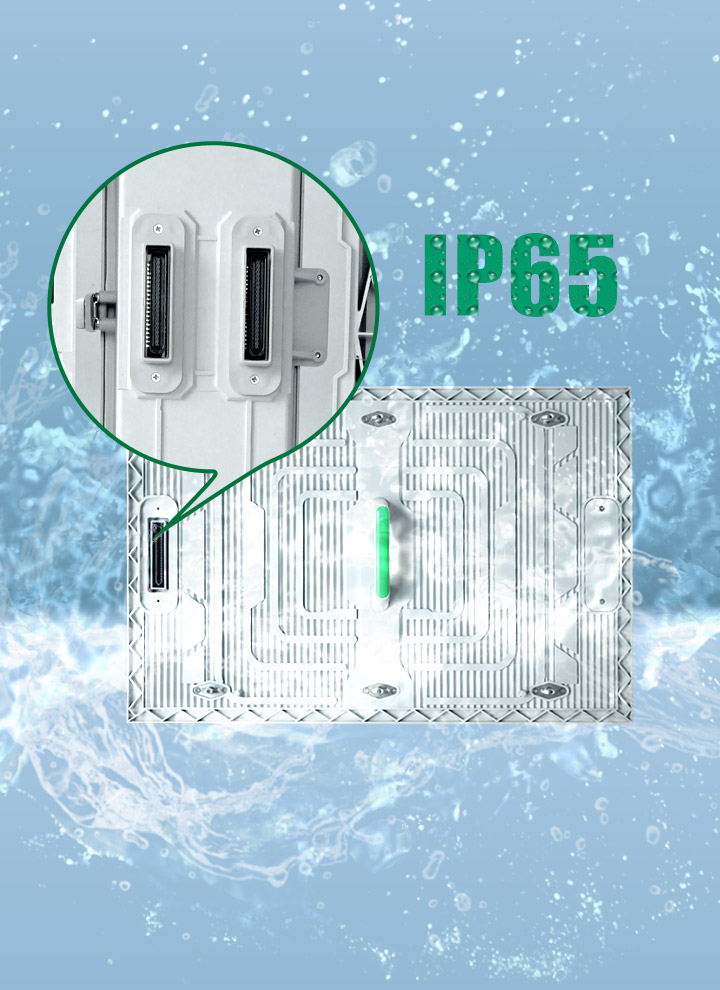
- Fully sealed enclosures preserve IP65 or IP67 weatherproofing ratings
Front-access panel design also contributes indirectly. Traditional rear-service cabinets require 600 to 900 mm (24 to 36 in) of maintenance clearance, which means a deeper, heavier mounting frame. Front-service cabinets with magnetic quick-release modules eliminate this requirement, allowing the screen to sit flush against a wall or column and reducing overall support frame weight.
Below 30 kg per Square Meter: What Changes at This Threshold
Based on common structural engineering load thresholds, the 25 to 30 kg/sqm range marks a practical dividing line. Current magnesium alloy cabinets in 960×960 mm (38×38 in) format fall within this range. Below it:
- Steel structure specifications can drop by one grade, reducing material volume and cost
- Standard mobile cranes can replace heavy-duty units for most mounting heights below 15 m (49 ft)
- Two-person installation crews become feasible for individual cabinet handling
- Simplified permit pathways become accessible in many jurisdictions
How Much Does Outdoor LED Screen Installation Actually Cost? Lightweight vs. Standard Cabinet Compared
The following three scenarios show how cabinet weight translates into real cost differences across common outdoor LED project types.
Scenario 1: Urban Rooftop Billboard (50 sqm / 540 sq ft)
| Cost Category | Steel Cabinet (~50 kg/sqm) | Magnesium Alloy (~27 kg/sqm) |
|---|---|---|
| Steel support structure | $45,000 to $65,000 | $28,000 to $40,000 |
| Crane rental | $8,000 to $12,000 | $3,000 to $5,000 |
| Installation crew (3 days) | $8,600 to $11,500 | $3,400 to $5,800 |
| Structural engineering review | $3,500 to $5,000 | $1,500 to $2,500 |
| Shipping | $4,200 to $5,500 | $3,000 to $4,000 |
| Estimated installation total | $69,300 to $99,000 | $38,900 to $57,300 |
These figures represent estimated ranges based on aggregated industry cost benchmarks for European and North American urban projects. Actual costs vary by city, mounting height, and site access. The per-cabinet price difference between steel and magnesium alloy is often smaller than the installation cost gap it creates.
Scenario 2: Highway Pole-Mount Retrofit
Existing pole structures have a fixed load capacity. When the new LED display exceeds the rated allowance:
- Pole replacement or reinforcement can cost $15,000 to $40,000
- Timeline extension: 4 to 8 additional weeks
A lightweight cabinet that fits within the existing pole’s capacity eliminates this scope expansion entirely. For highway operators managing dozens of sign locations across Europe, cumulative savings across a network rollout can reach six figures.
Scenario 3: Small Commercial Storefront Sign (Under 10 sqm / 108 sq ft)
With compact magnesium alloy cabinets at approximately 7.5 kg each, a single technician or two-person team can complete a storefront installation in one day using standard tools and a portable lift. Installation fees with a professional crew typically range from $1,000 to $5,000. A minimal crew with lightweight panels can reduce this to $200 to $500 in equipment rental alone.
Why Installation Speed Directly Impacts Your Revenue Start Date
For DOOH operators, every day between delivery and first ad play is lost revenue. A billboard generating $500 to $2,000 per day loses that amount for each day of extended installation.
Standard 960×960 mm (38×38 in) Format and Deployment Efficiency
The 960×960 mm (38×38 in) format dominates outdoor fixed installations because of the standardized dimensions:
- Simplify logistics planning and container loading
- Allow crews to work with predictable alignment patterns on site
- Eliminate custom bracket fabrication and on-site adjustments
Quick-Lock Systems and Tool-Free Connections: From Delivery to First Ad Play
| Phase | Steel Cabinet (~50 kg/sqm) | Magnesium Alloy with Quick-Lock (~27 kg/sqm) |
|---|---|---|
| Steel structure assembly | 3 to 4 days | 2 to 3 days |
| Panel mounting and connection | 2 to 3 days | 1 to 1.5 days |
| Calibration and testing | 1 day | 0.5 day |
| Total on-site time | 6 to 8 days | 3.5 to 5 days |
A 3-day acceleration on a billboard earning $1,000 per day can generate approximately $3,000 in recovered income. That gain repeats with every new installation across a network.
How Does Cabinet Weight Affect Long-Term Maintenance and Service Costs?
Installation is the first expense. Over a 5 to 10-year operational period, maintenance costs accumulate steadily.
Front-Access Serviceability: Why It Matters for Wall-Mount and Flush Installations
Wall-mounted displays without front-access capability require scaffolding or a bucket truck for every service call. On a building facade at 10 m (33 ft) or higher, a single visit can cost $1,500 to $3,000 in equipment and crew time alone.
Front-service cabinets with magnetic quick-release modules allow a technician to swap a module from the front face, no scaffolding, no crane. For operators managing 20 or more billboard locations, annual maintenance savings from front-access design can reach $15,000 to $30,000 across the portfolio. The initial cost premium for front-service cabinets is typically 10 to 20% above rear-service equivalents, but, over a 5-year period, front-access cabinets typically cost less to operate than rear-service equivalents for wall-mounted installations.
Modular Replacement vs. Full Panel Removal
| Service Type | Standard Heavy Cabinet | Lightweight Modular System |
|---|---|---|
| Unit removed for repair | Full panel (40 kg+) | Module only (3 to 8 kg) |
| Equipment required | Crane or lift | Hand tools only |
| Repair time on site | 2 to 4 hours | 15 to 30 minutes |
| Risk of secondary damage | Higher | Lower |
This difference reduces service visit duration by 60 to 70% and reduces the time advertisers see a partial or faulty display.

Request a Weight-to-Cost Assessment for Your Outdoor LED Project
Cabinet weight is not a secondary specification. It is a cost multiplier that runs through steel structures, crane rental, crew sizing, permit timelines, and every maintenance visit across the display’s operational life. Before requesting your next quote, ask your supplier for per-cabinet and per-square-meter weight data. Compare total project cost, not panel price alone.
Chipshow® offers the C-Slim series of outdoor LED cabinets in magnesium alloy, available in both 960×960 mm (38×38 in) and compact 480×640 mm formats. At approximately 25 to 26 kg and 7.2 kg per unit respectively, both formats include IP65 protection, front-service access, and quick-lock installation systems. Selecting the right cabinet weight class for your site can reduce total installation expenditure by 40% or more compared to standard steel configurations. Visit the Outdoor Fixed LED Display to discuss your project requirements.
FAQs About Outdoor LED Cabinet Weight and Installation Cost
Q1. How Heavy Should an Outdoor LED Cabinet Be per Square Meter?
It depends on installation type and site constraints. Steel cabinets range from 40 to 60 kg/sqm (88 to 132 lb/sqm). Die-cast aluminum sits at 25 to 35 kg/sqm (55 to 77 lb/sqm). Magnesium alloy reaches 23 to 30 kg/sqm (51 to 66 lb/sqm). For most wall-mount and rooftop projects, staying within the 25 to 30 kg/sqm range can reduce structural requirements, crane costs, and crew size, in line with common structural engineering load thresholds.
Q2. How Does Cabinet Weight Affect Billboard Structural Permits in Europe?
Heavier displays lead to stricter engineering analysis at higher costs between $2,000 and $5,000 per project. In most European cities, stamped plans by a licensed engineer are required for projects that exceed building load limits. Lower-weight systems can take advantage of fast-track permits.
Q3. Can One Person Install an Outdoor LED Billboard Panel?
This would depend on the size and weight of the case. With quick lock installation, cabinets that weigh about 7.5 kg each could be put together by one person if they were put together at ground level or a low height. Local safety rules for people working at height will still need to be taken into account.
Q4: Does Cabinet Weight Affect Shipping Costs for Outdoor LED Displays?
Yes, there is a clear link between the two. The heavier the cabinet, the more it costs to ship because fewer panels will fit into each container load, making the cost per unit higher. When setting up networks in multiple places, for example, the total difference in freight costs between steel cabinets and magnesium alloy cabinets can be substantial.
Q5: Does a Lighter LED Cabinet Reduce Insurance or Liability Costs for Billboard Operators?
In many jurisdictions, the cost of liability insurance for outside signs is based on the weight load values of the buildings. Extra engineering insurance is needed if an installation puts more weight on the building than it can normally support. Because the lighter sign cabinet is used, the total building load rate is not exceeded, which saves money on insurance.
Q6: How Does Cabinet Weight Affect Wind Load Calculations for Outdoor LED Billboards?
The structural loading that needs to be taken into account in the wind load calculations goes up as the weight of the cabinet goes up. When lightweight magnesium alloy cabinets are used, dead loads and wind loads on the structure are lower, which means that less steel is used for the framework.





