

Data ownership and governance for a smart pole should be settled before hardware is installed. The key question is not only who collects data, but who controls it, who can use it, who can share it, and who is accountable when something goes wrong. For procurement teams, the safest approach is to treat the pole as shared infrastructure and the data as governed municipal or program data unless the contract says otherwise.
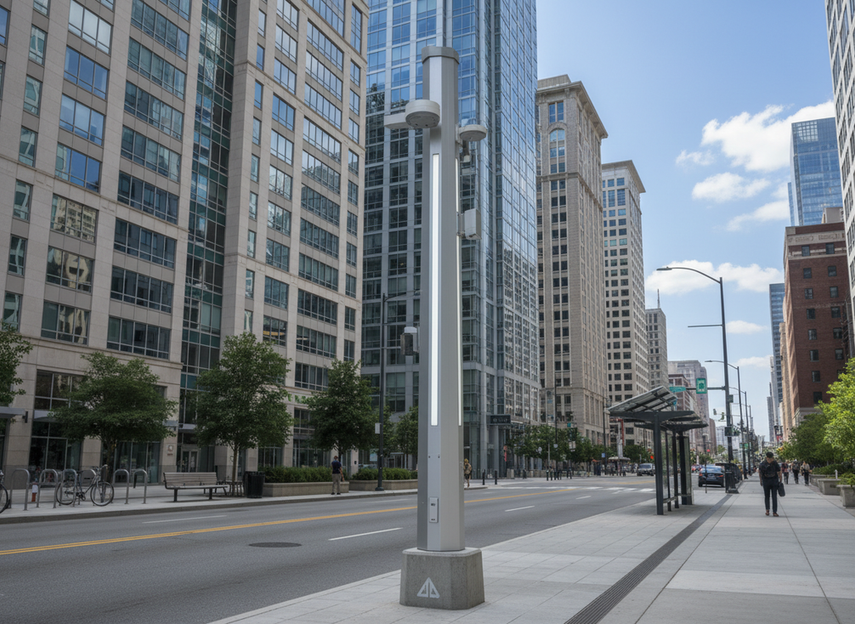
Who Owns Smart Pole Data?
Ownership is usually split across layers. The city may own the public infrastructure and the public-interest use case. A vendor may own certain device firmware, platform software, or proprietary analytics. A network operator may control transport and uptime. But raw sensor outputs, derived datasets, and event logs should not be assumed to belong to the supplier by default.
A useful starting point is to define four separate questions:
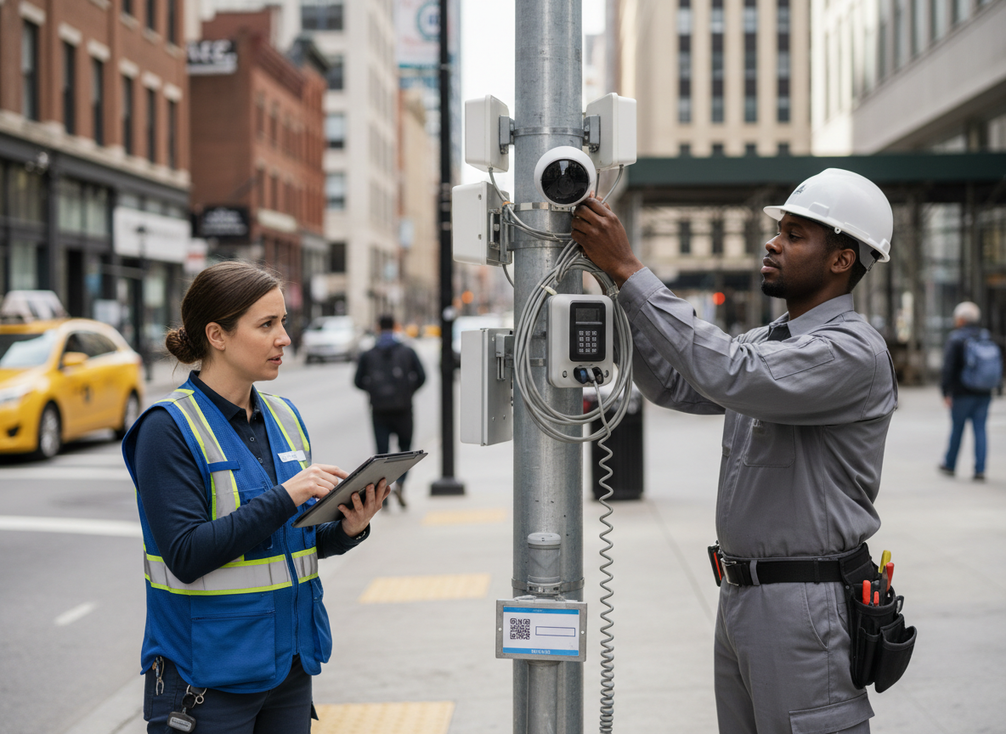
- Who physically hosts the sensors and edge devices?
- Who generates the data?
- Who stores and processes the data?
- Who can export, retain, monetize, or delete it?
That distinction matters because smart poles often support lighting, environmental sensing, video, connectivity, and public safety functions at once. Different data types may need different rules. A traffic count file is not the same as an image stream, and a maintenance alert is not the same as a personally identifiable record.
A municipal framework should specify data categories, permitted uses, retention periods, and transfer rights. Mcity’s data governance archetypes emphasize that smart mobility and infrastructure programs benefit from explicit data stewardship, role clarity, and documented decision rights rather than informal vendor practice. That principle translates well to smart city poles: define control first, then deploy technology.
In procurement language, it is often safer to reserve city rights to access all operational and public-interest data generated under the contract, receive data in usable non-proprietary export formats, approve any secondary use beyond the original municipal purpose, require deletion or return at contract end, and audit data flows and subprocessors.
If a supplier proposes ownership of data it creates, the city should ask whether that ownership is limited to the supplier’s internal telemetry or extends to city-generated and citizen-facing outputs. Those are very different positions.
Privacy and Compliance Boundaries
Privacy boundaries should be written around the use case, not the device. A pole that only measures luminance and air quality has a very different privacy profile than one that captures video, Wi-Fi metadata, or mobile device signals.
The minimum standard is to classify the data before collection begins. That means identifying whether the program handles personal data, location data, image data, or operational data, and then applying the right safeguards. NIST SP 800-213 on IoT device cybersecurity guidance is useful here because it emphasizes device capability, risk-based control selection, and the need to align security functions with data sensitivity and deployment context.

For privacy and compliance, the RFP should require a data inventory and classification method, purpose limitation language, retention and deletion rules, a notice and signage strategy where applicable, cross-border transfer disclosures if data leaves the jurisdiction, and records of subprocessors and downstream service providers.
If video analytics are in scope, the city should require a documented justification, masking rules where appropriate, and strict access logging. If sensor fusion can infer behavior patterns, the privacy review should treat those inferences as sensitive even when individual raw signals seem benign.
UNDP’s responsible smart city procurement and UN-Habitat’s governance playbook both stress the importance of public value, transparency, inclusion, and accountability in digital urban systems. That guidance supports a conservative approach: collect the minimum necessary data, explain the use plainly, and give the city real authority over changes to scope.
A practical boundary rule is this: if the data can identify a person, track a device, or reveal sensitive patterns about a neighborhood, it should be treated as governed data with restricted use and explicit review.
Are Smart Poles Secure?
They can be secure enough for the intended risk level, but only if security is designed into the architecture and maintained over time. A smart pole is not a single device; it is a node in a larger ecosystem that may include sensors, radios, cameras, edge compute, cloud dashboards, mobile apps, and third-party APIs.
CISA’s municipal smart city cybersecurity planning recommends layered defenses, asset inventory, access control, segmentation, patching, logging, and incident response planning. Those controls matter because smart poles are often distributed in public spaces and can be physically exposed.
Security expectations should include unique credentials and strong authentication for every device and admin account, encrypted data in transit and at rest where technically feasible, secure boot or equivalent integrity checks, vulnerability disclosure and patch timelines, role-based access control and least privilege, tamper detection and physical hardening where appropriate, and event logs that the city can review or export.
The city should also ask who monitors the environment after deployment. Security is not complete at go-live. If alerts route only to the vendor and not to the city, the city may not have timely visibility into outages, tampering, or suspicious access.
A reasonable procurement position is to require that the supplier support a documented security program and participate in incident response without assuming that the city will manage every technical detail. The contract should define escalation timelines, notification thresholds, and responsibilities for root-cause analysis.
What the RFP Must Spell Out
The RFP should remove ambiguity. If the document is vague, the contract will inherit the vagueness. That usually leads to disputes over data rights, security support, and system changes later.
Use this governance matrix as a decision aid during drafting:
| Decision area | City should specify | Vendor should respond with |
|---|---|---|
| Data ownership | Which data categories belong to the city, vendor, or both | Clear statement of ownership or stewardship by data type |
| Permitted use | Primary use, secondary use, and prohibited use | Confirmation of use limits and any exceptions |
| Retention and deletion | Retention schedule, deletion method, export format | Operational process and timelines |
| Access control | Who can view, administer, or export data | Role model, audit logging, and admin segregation |
| Security baseline | Encryption, patching, disclosure, incident response | Control descriptions and support commitments |
| Subprocessors | Approval and notification requirements | List of downstream providers and locations |
| Exit rights | Return, migration, and data portability | Transition support and end-of-term plan |
| Audit and reporting | Reporting cadence and audit rights | Evidence package and compliance artifacts |
The RFP should also ask for a data flow diagram, a system architecture diagram, a cybersecurity control matrix, a privacy impact summary, a sample incident response procedure, a business continuity and disaster recovery approach, and a description of firmware and software update practices.
If the project includes analytics, the RFP should distinguish descriptive analytics from predictive or automated decision-making. Those are different governance issues. Predictive outputs may be useful, but they raise stronger questions about bias, explainability, and public review.
If the agency wants to preserve future flexibility, it should require data portability and standards-based export. That reduces lock-in and makes it easier to move to a new operator or integration partner later.
Governance Roles After Deployment
Governance does not end at award. Smart poles need operating roles, escalation paths, and periodic review.
At minimum, the city should assign a data owner, a technical system owner, a privacy lead, a security lead, and a contract manager. In smaller deployments, one person may hold more than one role, but the responsibilities still need to be named.
The city should also establish a standing review process for new sensors or software features, new data uses, retention changes, incidents and near misses, and annual vendor performance and security reviews.
UN-Habitat’s post-deployment governance guidance reinforces that urban digital systems work best when institutions define accountability and public oversight early. In practice, that means smart pole governance should be part of the city’s broader digital and infrastructure governance, not a one-off procurement exercise.
A simple operating model looks like this: the city owns policy decisions, the operator manages day-to-day service delivery, the vendor maintains the product and fixes defects, the privacy and security leads review changes that alter risk, and the contract manager tracks obligations, renewals, and exit steps.
When roles are clear, disputes are easier to resolve. When they are not, security alerts, data requests, and incident reports tend to stall in the handoff between teams.
What to Check Before the RFP Goes Out
Before issuing the RFP, the team should verify that the project scope, governance model, and legal assumptions are aligned.
Confirm the intended public outcomes and the minimum data needed, classify each data type by sensitivity and operational purpose, decide whether the city, vendor, or a joint entity will control each dataset, define retention, deletion, and export requirements, map every integration and downstream recipient, identify security baseline requirements and incident notification timelines, prepare a review process for changes in sensors, analytics, or third parties, and ensure procurement, IT, legal, privacy, and operations all sign off on the model.
A good test is whether a non-technical reviewer can explain who controls the data, who secures it, and who is responsible if the deployment changes. If not, the RFP is not ready.
FAQs
Who Should Own Smart Pole Data?
Usually the city should retain control over data generated for public purposes, while vendors may retain rights to their proprietary software and internal telemetry. The contract should separate those categories clearly.
Is Smart Pole Data Public Records Data?
Not automatically. Public records treatment depends on jurisdiction, the data type, and applicable law. The city should not assume that all sensor output is public or exempt; it should review each category.
Can a Vendor Reuse Smart Pole Data for Its Own Analytics?
Only if the contract allows it. A conservative model limits reuse to the city’s authorized purpose unless the city grants separate permission.
What Security Controls Are Most Important for Smart Poles?
Strong access control, encryption, patching, logging, incident response, and physical tamper resistance are usually the core controls, consistent with CISA smart city guidance.
How Should the RFP Handle Data Retention?
The RFP should set retention by data type and use case, require deletion or return at contract end, and specify the format and timing for exports.
Do Smart Poles Require a Privacy Impact Assessment?
Often yes, especially if the project includes video, location tracking, Wi-Fi signals, or analytics that can identify people or patterns of behavior. NIST SP 800-213 and responsible smart city guidance support that risk-based review.
What Happens If the Vendor Changes Subprocessors?
The contract should require disclosure, approval rights where feasible, and updated documentation of where data is stored, processed, and transferred.
How Often Should Governance Be Reviewed After Deployment?
At least annually, and sooner if the city adds sensors, changes analytics, experiences an incident, or renews the contract.
A smart pole program is easier to govern when data rights, privacy limits, security duties, and exit rights are written down before procurement.