Any surface canbe an LED screen

December 1st, 2008


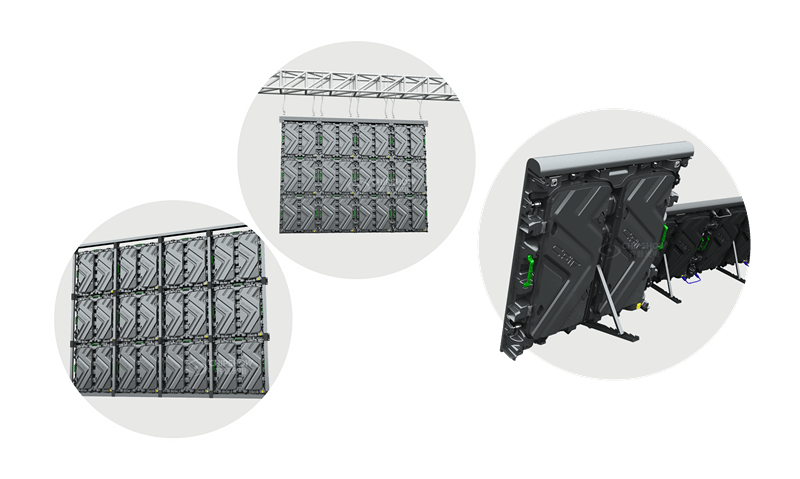
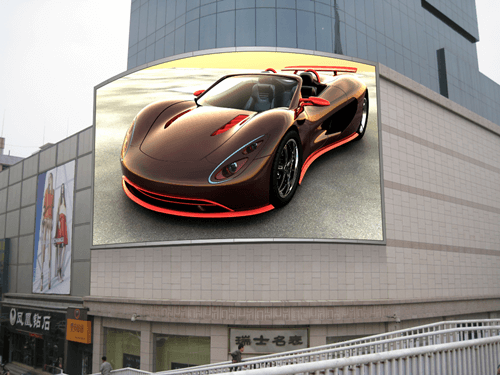
Now you can help your customers turn any surface into a screen for advertising and entertainment. The flexible LED display shown here can be shaped around any angle or obstruction to fit walls and ceilings as closely as a coat of paint.

And that’s not the only selling point:
• Tiny 4 x 4cm pixels give greater resolution
• Brightness of over 40cd/m2 per pixel makes for clearer viewing
• IP67-rated waterproofing allows for outdoor installation

Each pixel module is age-tested for 72 hours at 60ºC and then for another 15 days at room temperature. This ensures that our displays can stand up to extreme weather without a glitch. Since we released this model in 2007, it’s already been installed at venues in the US, mainland China and Macau.
To join our growing list of buyers, contact us today.


LED Display Fair In Milan

November 28th, 2008

High-light Product in Viscom Visual Communication 2008 in Milan, Italy

Chipshow’s creative 360° structure display attracted the most attention In the Viscom Visual Communication 2008 in Milan, Italy, during 13th to 15th, November.

To make a good promotion of chipshow brand, we started to take our products appear in the oversea exhibition. Italy is our first stop. To make the best performance of our display, we select 4 types of display, which is P10, P16, P20 and P62.5 net display. In one of them, Our P10 2RGB outdoor 360°display attracted the most attention from the visitors. Many visitors gave their best prize to this display for its creative design and supreme performance as a outdoor display.

Chipshow will never stop our steps on the way of creation and innovation. We will bring more creative and unique product to the other exhibition in US and Euro in 2009.


Outdoor LED Advertising Helps Search For Missing Children

September 27th, 2008

SAGINAW, Mich. — Parents of abducted children will now have another outlet to help bring their child home safe.
June 3, 2008,  many Advertising Company  tested a new initiative to distribute Amber Alerts on its digital billboards.
The alerts can be displayed to the more than 800 digital billboards nationwide, including four in Bay City and Saginaw.
“Digital billboards are on the cutting edge of outdoor advertising technology and are uniquely suited to purposes like Amber Alerts,” said Nancy Fletcher, Outdoor Advertising Association of America’s president and CEO.
The new LED billboards will help notify as many people as possible about recent child abduction, and provide more information that can help in the search for the abducted child, suspected abductor or suspected vehicle.
The Amber Alert Program was founded in 1997 and named in honor of Amber Hagerman, a 9-year-old who was abducted and murdered in Arlington, Texas, in 1996.

ABC of LED display products

September 6th, 2008


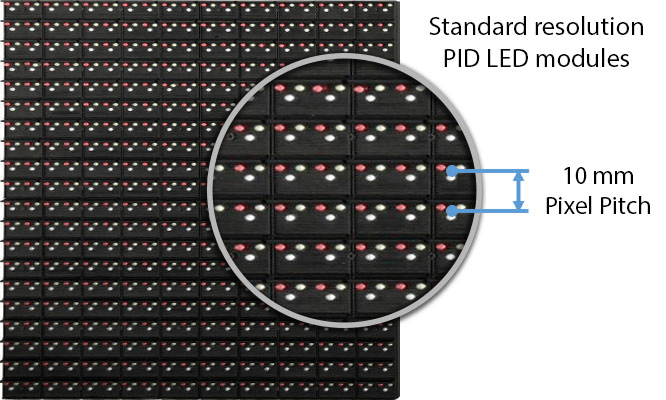
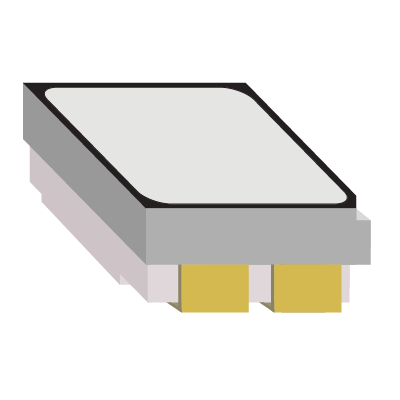
Above is module for P10mm T-virtual which applied for outdoor use, as we all know, it is for three lamps, the pixel for this is 16*16, size will be 160mm*160mm, in fact P10mm is the abbreviation for pitch 10mm, or you can say ph10mm.

 P10 mm means the pitch for it is for 10mm, may be it will be difficult to understand what does mean for “pitch” for novice, hereby it will be my honor to introduce for you especially help novice know more about LED products

 Pitch means the distance between the neighbor pixel(ps: not refer the distance between the distance neighbor lamps) because each pixel will include four lamps, and each pixel for some contain three lamps(just like the P10 module pic above), pls see as follow:

The first one pixel for kins of four lamps, the other pixel for kinds of three lamps, hope these cam help you understand more about our products even LED display

 One total display compose many cabinets, the cabinet is made up of module, so actually, the module is the fist step to complete the display


Hope you can understand more about these, and of course you are interested in the LED display(for a novice), pls feel free to contact with us, we can offer more for you, make you know more about this kind of product.

What is a Diode?

September 1st, 2008

A diode is the simplest sort of semiconductor device. Broadly speaking, a semiconductor is a material with a varying ability to conduct electrical current. Most semiconductors are made of a poor conductor that has had impurities (atoms of another material) added to it. The process of adding impurities is called doping.

In the case of LEDs, the conductor material is typically aluminum-gallium-arsenide (AlGaAs). In pure aluminum-gallium-arsenide, all of the atoms bond perfectly to their neighbors, leaving no free electrons (negatively-charged particles) to conduct electric current. In doped material, additional atoms change the balance, either adding free electrons or creating holes where electrons can go. Either of these additions make the material more conductive.

A semiconductor with extra electrons is called N-type material, since it has extra negatively-charged particles. In N-type material, free electrons move from a negatively-charged area to a positively charged area.

A semiconductor with extra holes is called P-type material, since it effectively has extra positively-charged particles. Electrons can jump from hole to hole, moving from a negatively-charged area to a positively-charged area. As a result, the holes themselves appear to move from a positively-charged area to a negatively-charged area.

A diode comprises a section of N-type material bonded to a section of P-type material, with electrodes on each end. This arrangement conducts electricity in only one direction. When no voltage is applied to the diode, electrons from the N-type material fill holes from the P-type material along the junction between the layers, forming a depletion zone. In a depletion zone, the semiconductor material is returned to its original insulating state — all of the holes are filled, so there are no free electrons or empty spaces for electrons, and charge can’t flow.

At the junction, free electrons from the N-type material fill holes from the P-type material. This creates an insulating layer in the middle of the diode called the depletion zone.

To get rid of the depletion zone, you have to get electrons moving from the N-type area to the P-type area and holes moving in the reverse direction. To do this, you connect the N-type side of the diode to the negative end of a circuit and the P-type side to the positive end. The free electrons in the N-type material are repelled by the negative electrode and drawn to the positive electrode. The holes in the P-type material move the other way. When the voltage difference between the electrodes is high enough, the electrons in the depletion zone are boosted out of their holes and begin moving freely again. The depletion zone disappears, and charge moves across the diode.
When the negative end of the circuit is hooked up to the N-type layer and the positive end is hooked up to P-type layer, electrons and holes start moving and the depletion zone disappears.

If you try to run current the other way, with the P-type side connected to the negative end of the circuit and the N-type side connected to the positive end, current will not flow. The negative electrons in the N-type material are attracted to the positive electrode. The positive holes in the P-type material are attracted to the negative electrode. No current flows across the junction because the holes and the electrons are each moving in the wrong direction. The depletion zone increases. (See How Semiconductors Work for more information on the entire process.)


When the positive end of the circuit is hooked up to the N-type layer and the negative end is hooked up to the P-type layer, free electrons collect on one end of the diode and holes collect on the other. The depletion zone gets bigger.

The interaction between electrons and holes in this setup has an interesting side effect — it generates light! In the next section, we’ll find out exactly why this is.

Copy From:http://electronics.howstuffworks.com

A 3-D light emitting diode (LED) Screen

September 1st, 2008

This amazing lighting is the 3D LED Display. It builds with 25,000 lightballs, each lightball containing 12 LED. It can display 16 million colors and 25 images per second.(Wow!). It developed by the Swiss Federal Institute of Technology Zurich for their 150th anniversary. It is 5 by 5 by 1 meter and it is 3.3 tons. If you go to Zurich, you can see it in the train station’s main hall, and it will be there till September 2009.(a very cool lighting!) Check out see more pictures.

LED video wall display

August 26th, 2008

LED video wall displays give you the power to communicate, to motivate, and to entertain. LED video wall displays are seen to be sited for outdoor advertising, in casinos, for events like sporting events in stadium and arena, for staging and mobile display etc.

This larger dynamic range helps Act One displays show more details on dark scenes, and smoother, more brilliant colors for all videos and pictures.

SMD lighting Technology the leading manufacturer of LED video wall displays has proven itself in distribution of LED video wall displays with solely providing high brightness output to ensure high visibility for outdoor video displays which is very critical issue.

The horizontal viewing angle of video displays is up to 150 degrees in the daytime, and up to 170 degrees in the night time. It means with displays, you will be able to reach more viewers and broadcast your information more efficiently.

The display systems come with user-friendly software to perform remote control and management. With the software, you can remotely monitor the status of the display, as well as upload and schedule files to show.

Features
SMD LED Packages:

Red, Green and Blue light blends within a single package to reduce the necessary viewing distance.
High Brightness:
User-controlled intensity of up to 2,000 nits overcomes harsh indoor lighting environments.
Advanced Video Processing:
12-bit LED image processing produces a crystal-clear picture with true-to-life color reproduction.
LED HD Ready:
Aspect ratio independent and compatible with both standard and high-definition image feeds.
Any Shape, Any Size:
Module-based design allows for unique shapes and aspect ratios while eliminating all limitations on display size.

what’s the main cause of uniformity problems in LED displays

August 23rd, 2008

LED fullcolor display are amazing with it’s bright enough to see in broad daylight;stand up to severe weather conditions and pwoer less. But as two sides of a coin, LED have her biggest disadvantage—-Uniformity of Luminance and Color.

The root cause of luminance and color uniformity problems in LED screens is the LEDs themselves. Modern manufacturing processes for LEDs produce LEDs that vary greatly in both brightness and color. For example, when you apply the same electrical current to two green LEDs produced as part of the same batch, the brightness may vary by as much as 50% and the wavelength may vary by as much as 15-20 nanometers. These differences are very noticeable and LEDs that vary by this much should not be used in the same video screen.

By contrast, televisions, which rely on phosphors to produce brightness and color, do not have this problem. The phosphors in each pixel produce nearly the same brightness and color when hit with the same amount of energy from the cathode ray gun. Since the pixel response in CRT devices is very repeatable, the uniformity of CRTs is very high. (See the first line of pixels in Figure 1 below.)

LED screens, however, have two problems as mentioned above. First, the brightness of each LED varies widely even though they are driven by the same voltage and current. (See the second line of pixels in Figure 1, where the brightness of each LED is represented by different size dots.) Second, the colors of the LEDs are also quite variable. (See line 3.) When you add these two problems together (See line 4), you can see why achieving uniformity in a LED screen is so difficult. Imagine viewing a TV where the phosphor dots are different sizes and different colors. It would not be a pretty sight, just like some LED screens you may have seen.

Another cause of non-uniformity in LED screens is that the LEDs get slightly dimmer as they are used (see Figure 2). The blue LEDs dim the most and the red LEDs dim the least, but the biggest problem is that individual LEDs dim differently over time. So, even if an LED screen were perfectly uniform when it left the factory, it would loses its uniformity as the LEDs dim, and after about 2 years of usage it would begin to look quite non-uniform.
led show

奥运金牌的含金量

August 16th, 2008

现代奥运会项目的金牌简单地说可以分为三类。

第一类是职业选手的项目,如足球、蓝球、网球等等。这些项目,本身有极高的商业价值,一流队员多像姚明一样,身价千万,靠打球谋生,是地道的职业选手。这类项目,本来是被以业余为宗旨的奥林匹克运动所排斥,如今虽然有些喧宾夺主,但现在还不是奥运的主流。

第二类是田径、游泳等项目。这类项目是奥运的正宗,以业余为宗旨。但是,因为这些项目观赏性强,商业价值不断提升,每个精英运动员都能拿到一大堆商业赞助。比如菲尔普斯,这次如果拿了八金,赞助他的泳装公司Speedo就会额外给他100万美元的红利。这点钱比起姚明的收入来也许是小意思,但对于露面有限的游泳运动员来,则是一笔不小的财富。这笔财富加上其他收入,不仅使这些精英运动员能够全心全意地训练,而且用得起一流的教练、医生、营养师等等,实际上也职业化了。

第三类则是射击、举重、赛艇、跳水、乒乓球、体操等项目。这些项目在世界大部分国家都没有商业价值,队员基本是业余的,全凭个人兴趣及少量NGO赞助。比如美国的赛艇运动员,拿了世界冠军还要到商店去打工。

冷战时代,体育成为苏美两大阵营的“面子游戏”。苏联、东德、罗马尼亚等国家通过举国体制,靠国家的大规模投入,以计划经济的方法经营体育。美国等西方国家则挖掘有商业化潜力的项目,以市场经济的方法与之抗衡。结果,在田径、游泳等有商业潜力的项目上,美国尚可与苏联、东德有一争;但在没有商业潜力的项目上,则大败而归。到冷战后期算一下金牌奖牌总数,美国不仅败给苏联,甚至败给东德。

冷战结束后,苏联、东德、罗马尼亚的体制迅速瓦解,在奖牌排行榜上的位置迅速下降,自雅典奥运会开始让位于中国。但是应该看到,中国的崛起,虽然和中国国力大幅度提升有关,但更大的原因,恐怕还是苏联东欧国家放弃计划经济体制后留下的真空。这个真空,主要都集中在前面所说的第三类项目上。比如,在体操、跳水等项目上,苏联、罗马尼亚国家一直压中国一头,如今已经没有问鼎的实力。中国的对手已经不复存在,中国垄断金牌自然容易。在女子举重等项目中,中国队几乎没有对手,因为这个项目在别的国家几乎没有几个人玩。而在前两类职业化或者有巨大商业潜力的项目中,美国等西方国家继续保持优势,中国尚难与之竞争。

看看前几天中国队的金牌,基本全是射击、举重、体操、跳水这些第三类项目。中国在这些项目上培养了大量的专业运动员,而对手则多半是业余运动员,除了训练之外还要自己谋生。这样我们的优势自然很大。而在足球、篮球、田径、游泳等项目上,中国运动员则缺乏上佳表现。

所以说按照奥运的精神来说,奥运金牌只是对一个提高国民身体素质的荣誉奖励,而不是为了金牌而着重培养一部分的专门人员。从这个意义上来说我们的金牌的含金量到底有多高呢?

Great Olympic, Big Fun with Chipshow LED Screen

August 11th, 2008

The 29th Olympic Game started its ceremony in Beijing in 8th August, 2008. This is the first time the great Olympic is held in this ancient country.

The Opening Ceremony started at 20 o’clock in the famous Nestle Stadium, which is the main stadium during the Olympic Sports meeting. The whole ceremony gave an astonishing impression to the whole world of the Great China’s ancient culture. The wonderful performance showed the steps to melt into the new world of China and the great joy with the Great Olympic to be held in China.

To let more people to enjoy the fun with the Olympic, Our Company built up an LED screen in the Industrial park to live Opening Ceremony and sports. Also, the Olympic is also a great chance for the LED screen industry in China. Many Chinese-made LED screens were used in the Olympic stadiums, which show the quality of the Chinese-made screen has reached a very high standard. Our company welcomes clients from all over the world to our factory to test our best quality screens.

LED display show sports